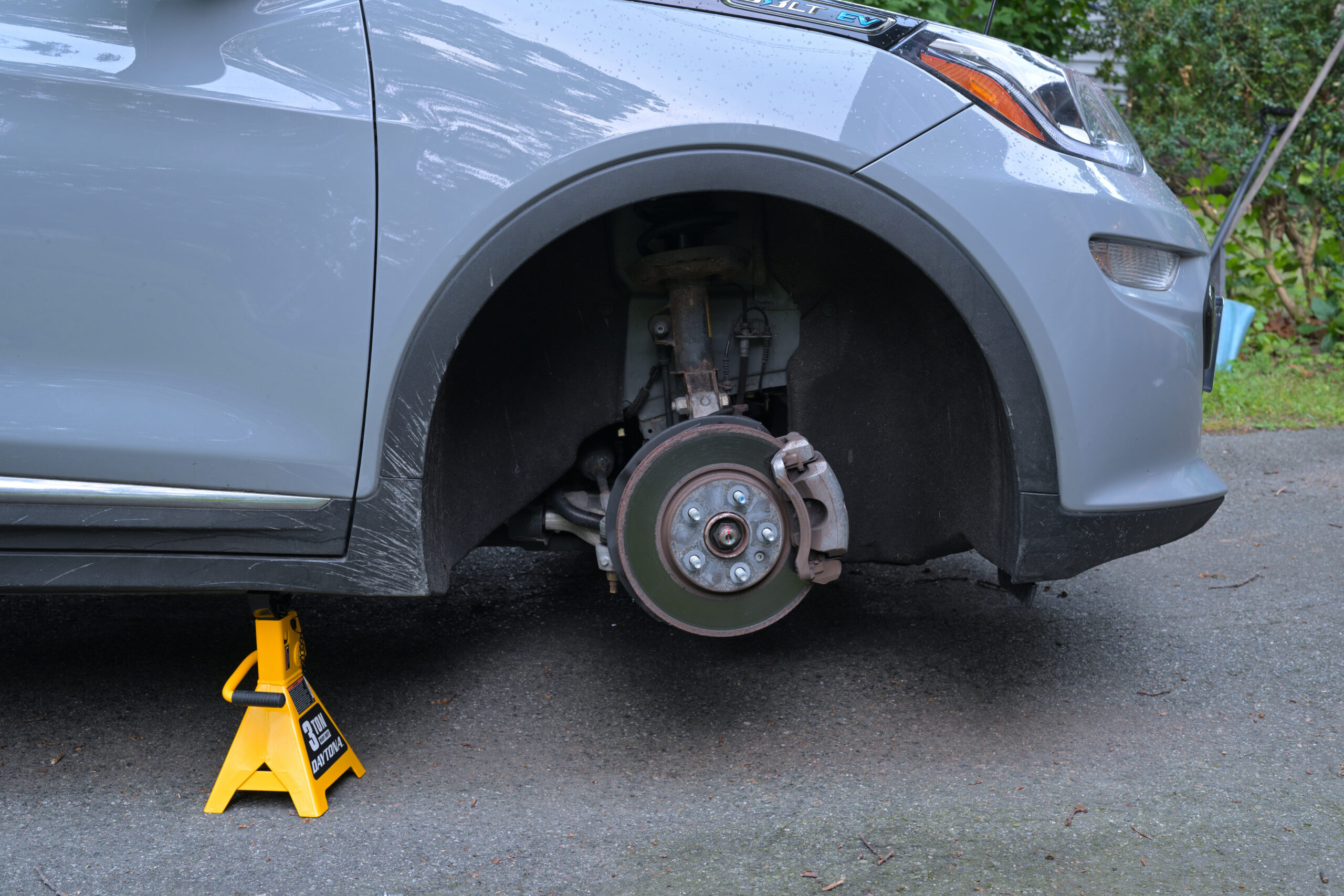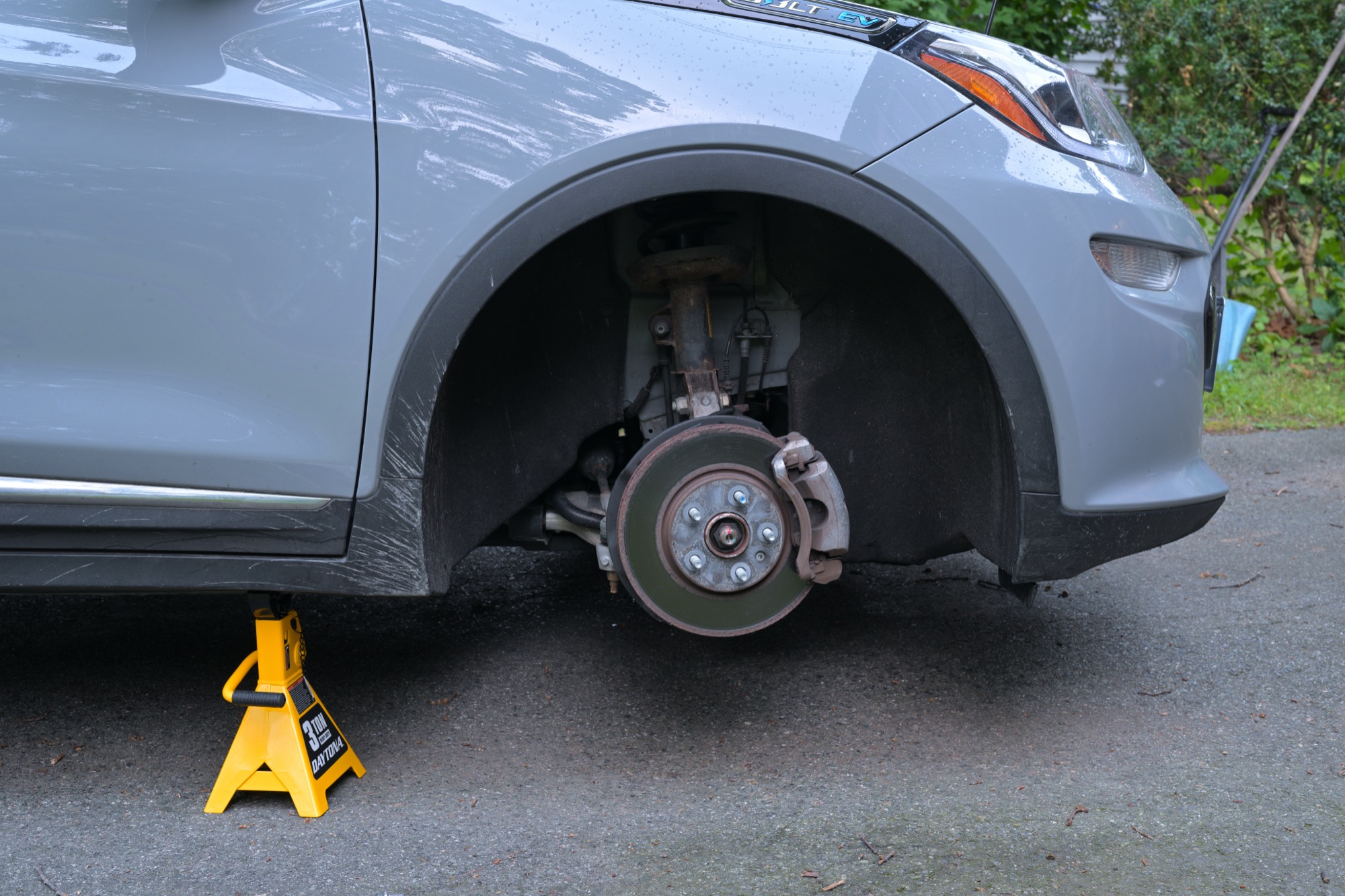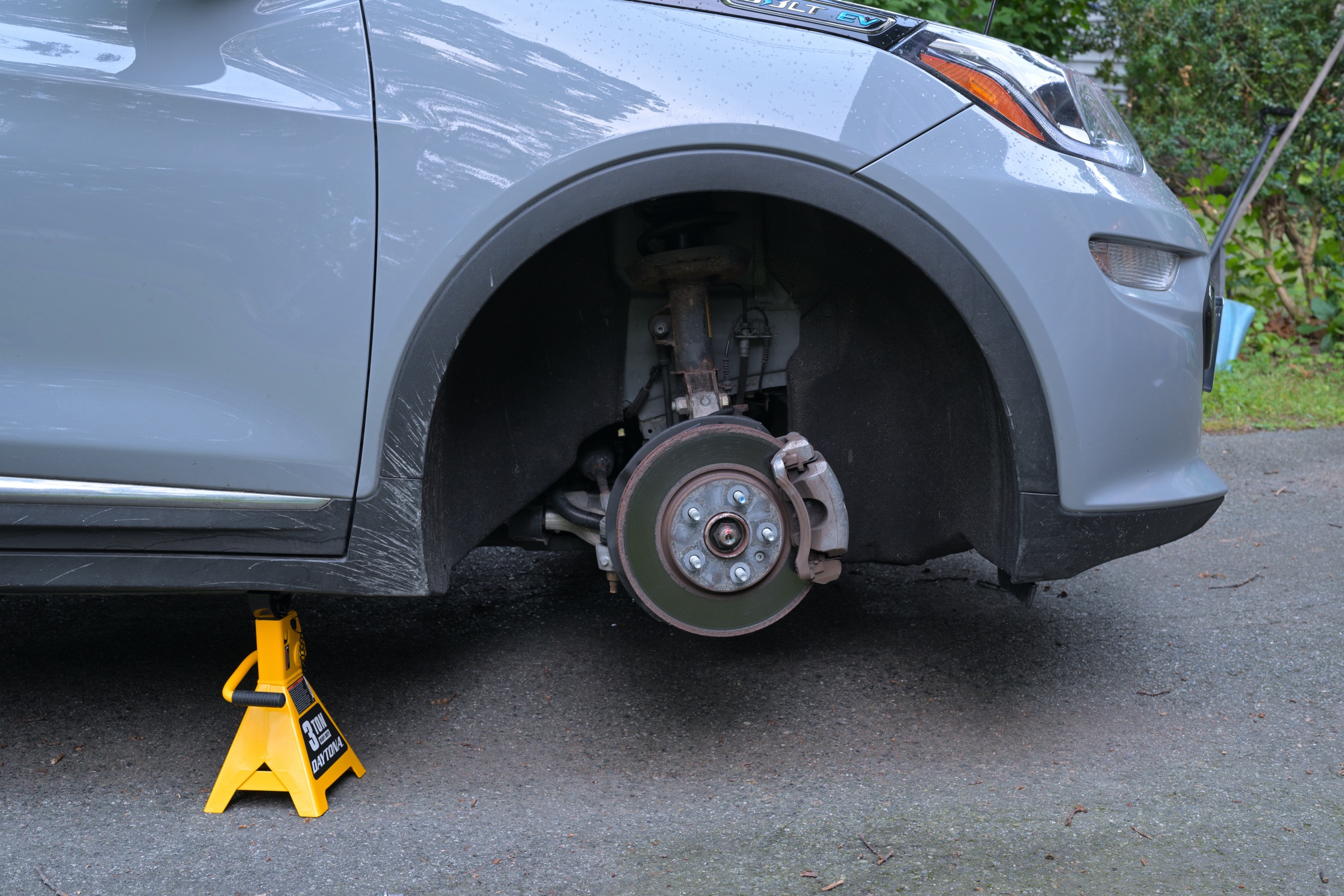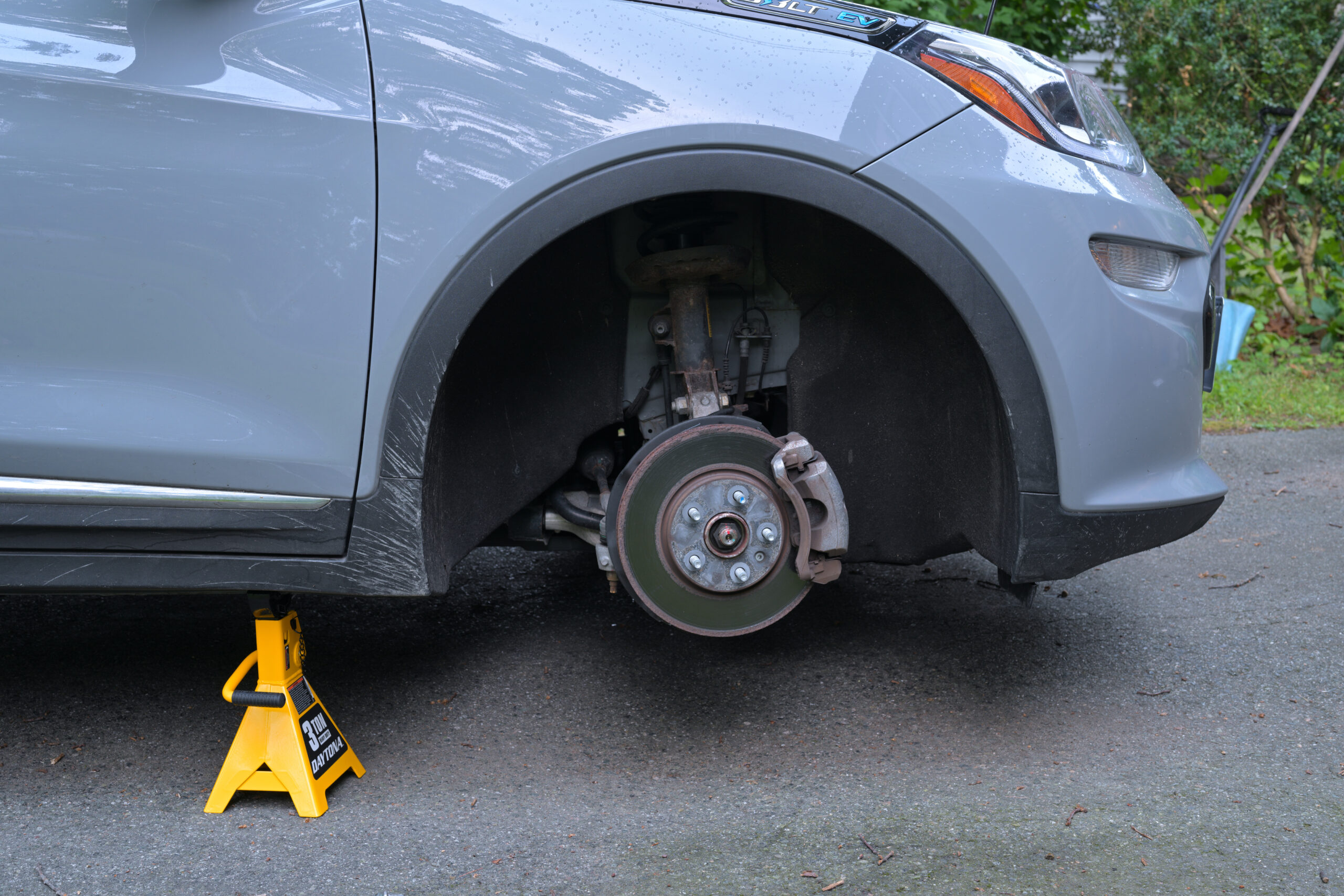
A dull red disc showing through the wheel after repeated hard stops is brake glow. On an ordinary road that sight is a reason to stop, not a normal warm brake. A single normal stop from 60 mph typically raises front rotors only about 150–250°F—hot enough to burn skin, not hot enough to look red.
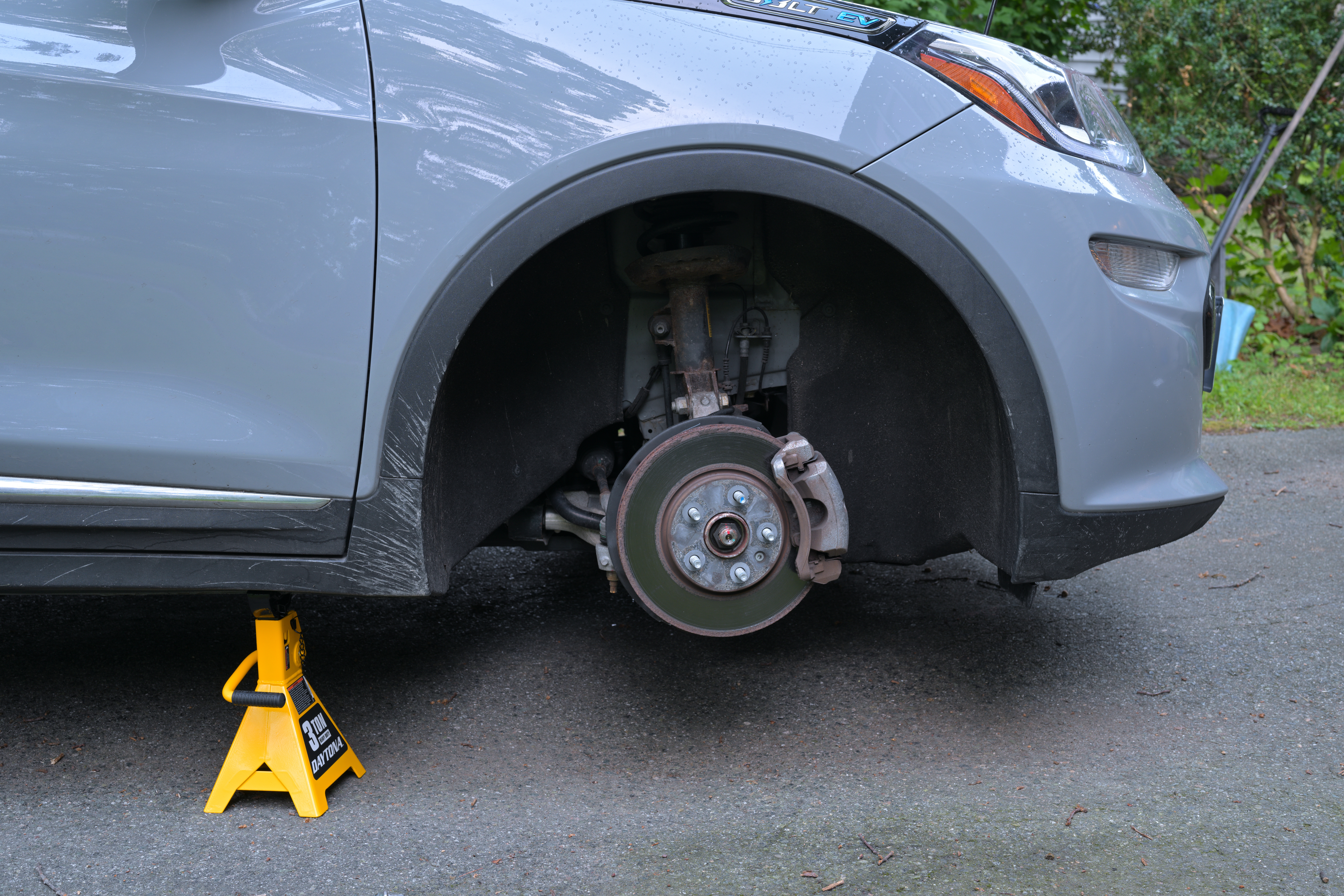
That dull red disc is glow—not a normal warm brake
After a string of hard stops, some drivers glance at a wheel and see a muted red ring behind the spokes. That color is thermal radiation from cast iron that has climbed into the 600–800°F range. It is not chrome reflection, not a brake-light wash, and not the mild heat left after one ordinary stop in traffic.
Heat in a brake job depends on speed, vehicle weight, and how hard and how long the pads are pressed into the rotor. One controlled stop from 60 mph on a light passenger car usually leaves front rotors around 150–250°F. At that temperature the metal is dangerous to touch and may smell faintly of pad resin, yet it stays dark. Visible dull red means the thermal load has already left the everyday envelope. On a public road, treat glow as past a normal stop: reduce speed, find a safe place to park, and let the disc cool in free air before you decide whether the trip can continue.
If you are comparing how fade builds on two-wheelers versus cars, the long-hill bicycle and e-bike case is covered in bicycle and e-bike brake fade on a long hill. City scooter stop-and-go heat and lingering drag after rain are covered in scooter brakes, city stops, and drag after rain.
Friction turns motion into heat—and then into fade
A hydraulic disc brake converts kinetic energy into heat at the friction pair. The caliper clamps friction pads against a rotating iron rotor. Most passenger cars use a vented front rotor—two friction faces with cooling passages between them—because the front axle does most of the stopping work. Brake fluid in the lines and caliper pistons carries the pedal force; it is not meant to boil.
As temperature climbs, two problems appear. Fade is more pedal travel or effort for less stopping power. When the pedal stays firm but the car takes longer to stop, you are usually in pad fade: the friction surface has glazed or lost grip under heat. When the pedal sinks toward the floor under steady pressure, you are closer to fluid fade: vapor in the hydraulic circuit compresses where liquid fluid would not. Either pattern after repeated hard stops is a decision point—do not keep stacking heat on the same discs hoping the next stop will feel normal.
How size and use change how fast heat builds
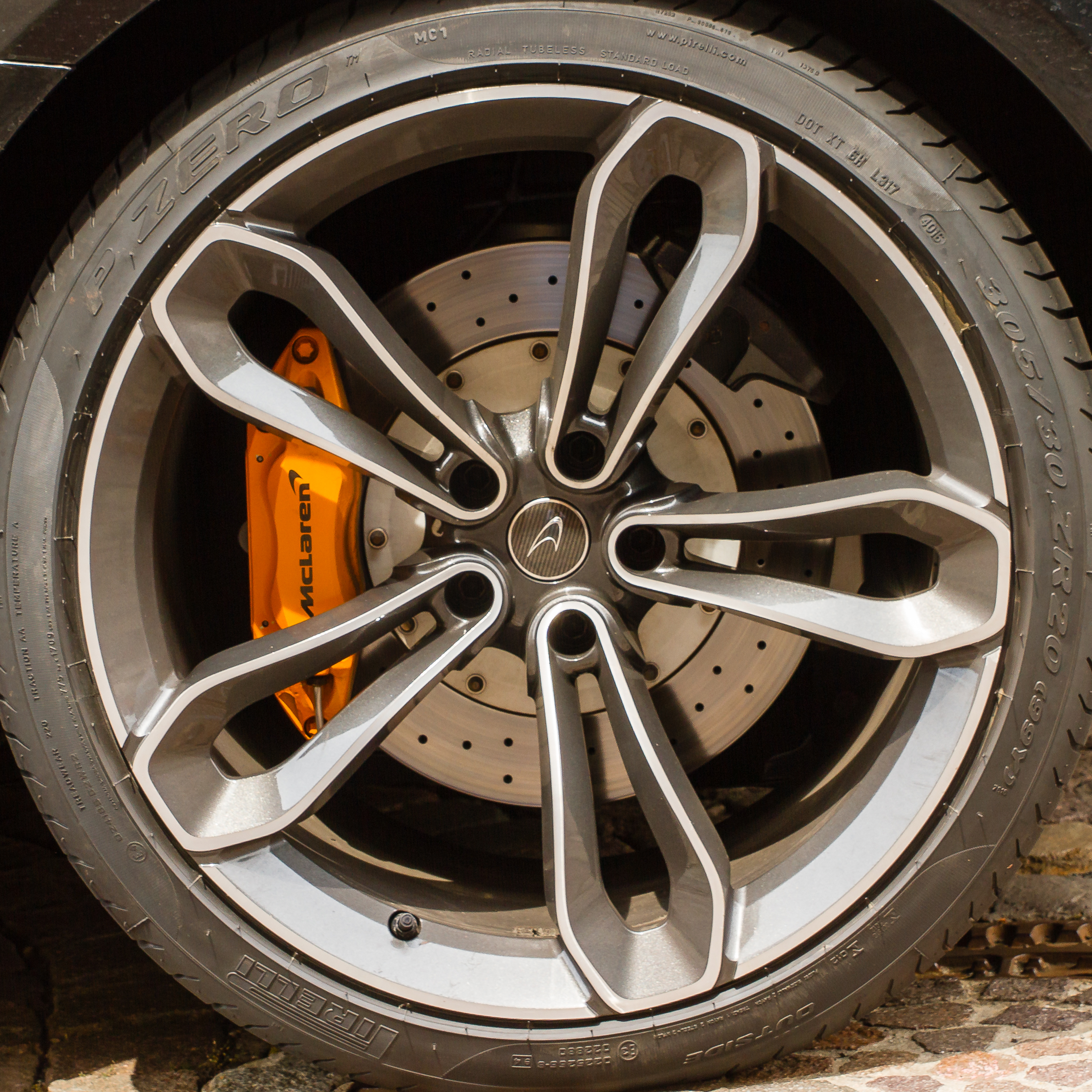
The same road speed does not produce the same brake heat on every vehicle. Kinetic energy scales with mass and with the square of speed, so a full-size SUV or light truck at highway speed dumps far more energy into larger rotors than a compact car at the same speed. That is why heavy vehicles carry bigger discs and often larger pads: more iron and more friction area to absorb and shed heat.
A motorcycle sits at the other end of the scale. Its front disc is smaller and cooler air hits it more directly, yet a hard stop from high speed—or a caliper that drags and never fully releases—can still heat that thin disc until it glows. Do not paste car runout limits, lug-nut torque charts, or other passenger-car service specs onto a motorcycle; the useful comparison here is size and duty cycle, not shared fastener numbers.
Speed still dominates. A light car braking from 60 mph can generate more braking heat than a heavy vehicle braking from 20 mph, even though the heavy vehicle weighs more. Slow rolling stops in parking lots rarely push rotors into the glow band. Stacked panic stops, a long descent with continuous pedal pressure, or a stuck caliper that keeps rubbing after you release the pedal are the patterns that push ordinary road driving into 600–800°F territory.
Related reading for later: downhill driving, riding the pedal, and a soft pedal. Separate from that, why you should not pour water on a hot rotor is the mistake that turns a hot disc into a cracked one.
What you can check from the driver’s seat and the curb
Before tools come out, several signals tell you the brakes have been overloaded or are not releasing evenly:
- Smell: a sharp hot-friction odor after hard use often tracks with pads that have been pushed hard; a burnt, acrid smell that lingers after a cool-down pause is worth treating as a stop-and-inspect cue.
- Smoke: light smoke near a wheel after repeated hard stops means the friction pair is still dumping heat into the air; continued smoke after you have released the pedal and parked points toward drag or a stuck caliper.
- Soft or sinking pedal: less reserve travel or a pedal that settles underfoot is a hydraulic or fluid-temperature warning, not a reason to press harder.
- Pull: the car steering toward one side under braking often means one corner is hotter, grabbing harder, or dragging.
- Blue rotor after it cools: a bluish tint on the disc face is a common after-effect of severe overheating and hard spots forming in the iron.
- One wheel hotter than the others: carefully comparing radiant heat from a short distance (not by grabbing the rotor) can reveal a caliper that stayed applied while the others released.
Any one of these after a glow event is enough to end casual driving for the day. Multiple signals together mean the brakes need a mechanic, not another test stop.
Roadside: cool the discs before you decide to continue
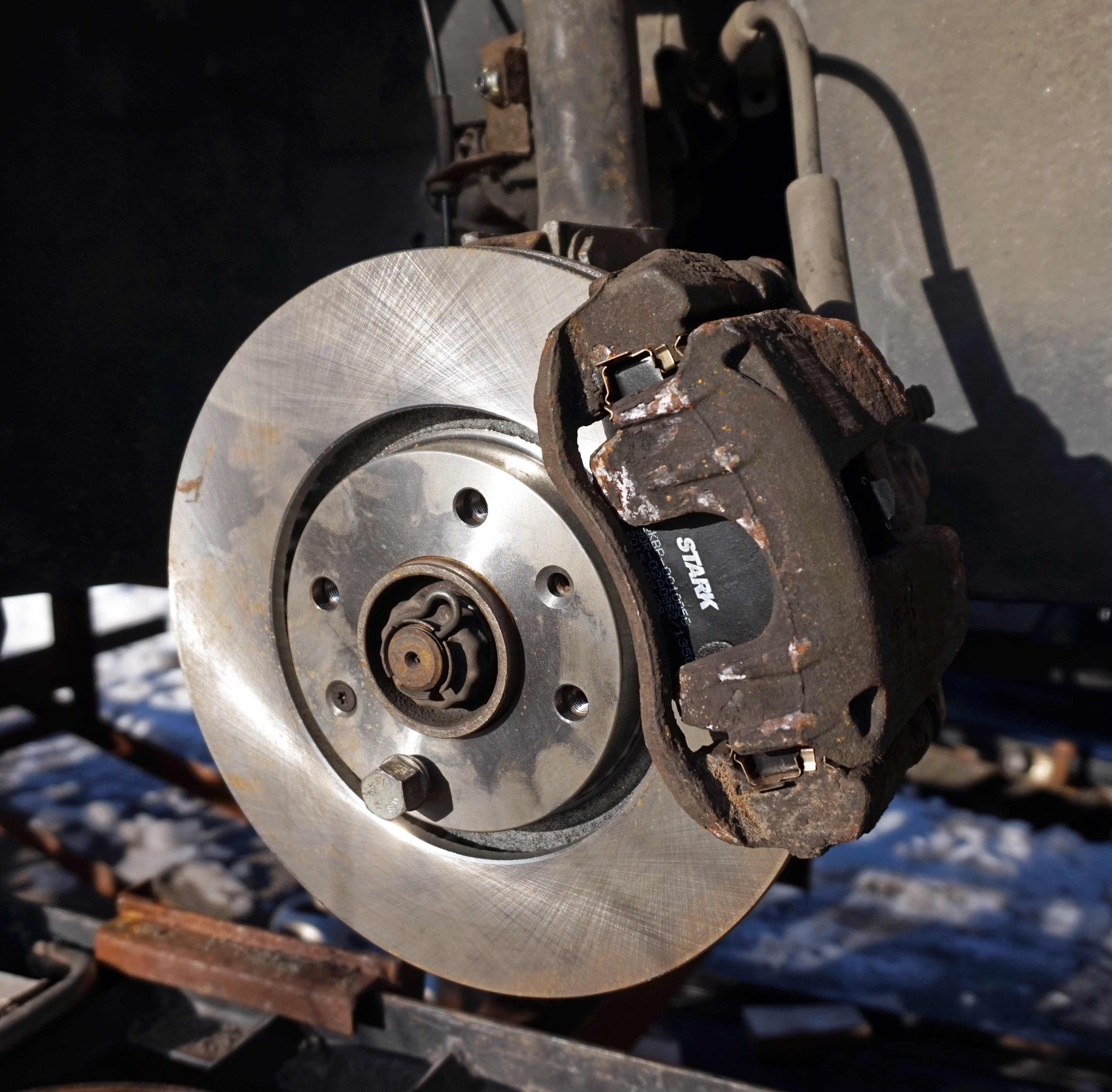
If you see glow, smell heavy smoke, or feel the pedal change after hard use, stop in a safe place away from traffic. Shift to park or leave the car in gear with the parking brake only if the rear brakes are not the ones smoking; the priority is to get off the road without clamping the glowing disc harder than necessary. Release the service pedal so the pads are not held against the hot rotor. Let air move across the wheel openings; do not spray water on the disc.
Continue only if, after a cool-down period, the pedal feels firm and a gentle low-speed stop feels normal and straight. Soft pedal, a pull to one side, or smoke that keeps coming after the pads have been released ends the trip—arrange a tow or a short crawl to the nearest shop only if that crawl is clearly safer than sitting in a live lane. Another hard stop “to test” a glowing brake is how 600–800°F becomes cracked iron or boiled fluid.
What a mechanic should inspect after a glow event
A shop visit after visible glow should focus on heat damage, not a casual pad glance. Pads need to be measured and inspected for glazing, taper, and remaining friction thickness. Rotor thickness should be checked with a micrometer against the discard minimum stamped on the hat or in the service data. Cracks, especially radial cracks from the edge, are a replace decision. Hard spots—localized hardened patches that feel like judder under light braking—often return after machining, so the practical call is to replace rotors in pairs on the axle that overheated rather than hoping a skim cut will hold.
The caliper must slide and retract freely; a stuck piston or frozen slide pin will recreate glow on the next descent. Fluid that has been driven near boil may need replacement as part of a broader hydraulic service, but opening the hydraulic system is shop work with a proper bleed procedure—not a roadside DIY step list. The decision after glow is whether the friction pair and the caliper hardware are still fit for highway speeds, not whether the car can limp home on hope.
Temperatures that glow versus temperatures that only feel hot
Hold the numbers side by side. Several hard stops in a row can push front rotors into the 600–800°F range where dull red appears and fade becomes likely. A single normal stop from 60 mph lands near 150–250°F and does not glow. Vented front rotors move air through the hat and between the faces, so they shed heat faster than solid rear rotors of similar diameter. Semi-metallic pads usually accept more heat before friction collapses than organic pads do, which is why many high-duty street compounds lean metallic—but even semi-metallic material will fade if you keep stacking panic stops without cool-down air.
Those ranges are decision tools: if you never saw red but the pedal went soft after a long hill, treat it like a fade event and cool down. If you saw red on a public road, you already crossed the glow threshold; cool, inspect, and do not schedule another hard-braking sequence until the hardware has been checked.
The mistake that makes a glowing rotor worse
Pouring water on a glowing rotor is the one action that reliably makes this worse. The sudden surface quench can crack the iron while the core is still far hotter than the skin. Cracked rotors do not return to safe service with a cool-down pause. Do not keep driving on a glowing or heavily smoking corner either; continued drag dumps more heat into already stressed metal and fluid. Air cooling with the pads released is the conservative choice. Why you should not pour water on a hot rotor is worth its own reminder every time the disc looks red: water is not a shortcut, and glow on an ordinary road is already past a normal stop.
Bottom line: dull red behind the wheel after repeated hard stops means roughly 600–800°F at the iron—glow, not a routine warm brake. Park safely, release the pedal, cool in air, and get the pads, rotors, calipers, and fluid assessed before the next hard stop.
Read next: Downhill driving, riding the pedal, and a soft pedal, and Hatchback, sedan, and compact-SUV brakes.