A long descent can fade the brakes on a bicycle or an e-bike. The lever may still feel firm while the bike keeps rolling, or it may pull closer to the bar and stop doing much. That is a reason to pull off the road and let the brake cool. It is not a normal way to finish the hill.
Friction at the rim or the rotor
A brake slows a bike by rubbing, and rubbing turns speed into heat. The longer the rub goes on, the more heat the parts have to hold.
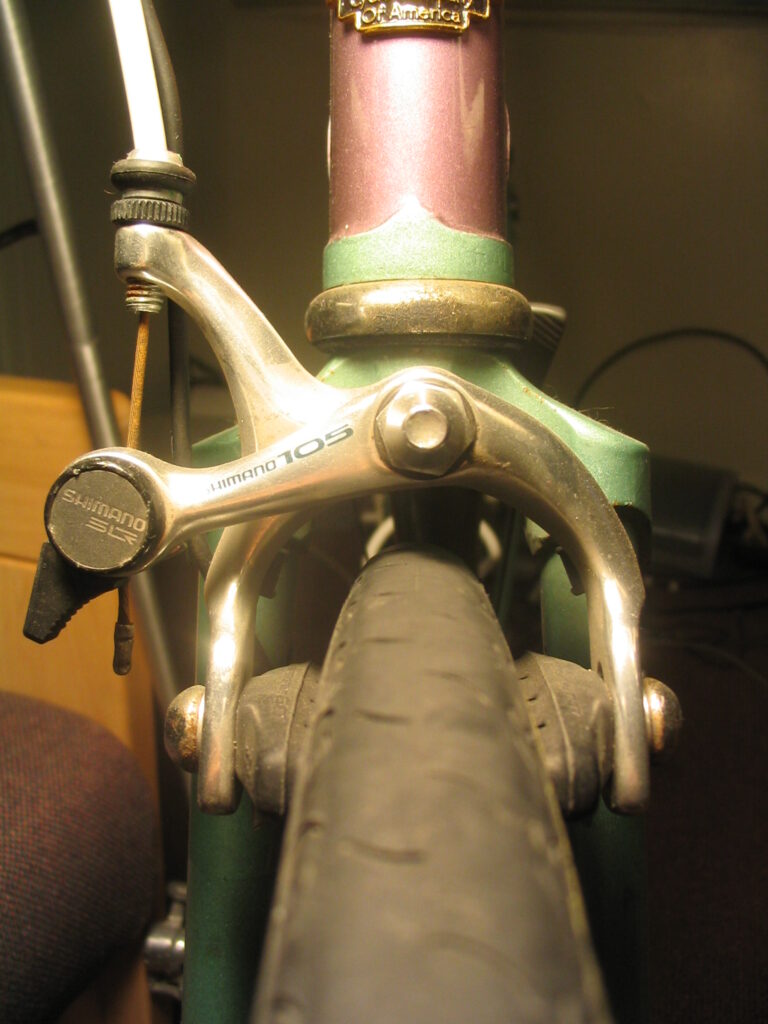
A rim brake does that work on the wheel itself. You pull a lever, a cable moves, and two pads squeeze the braking track on the rim. The heat goes into those pads and into the metal of the rim, right next to the tire. Side-pull calipers, V-brakes, and cantilever brakes are all rim brakes. The shape of the arms changes, and the job does not: the rim is the surface that gets hot.
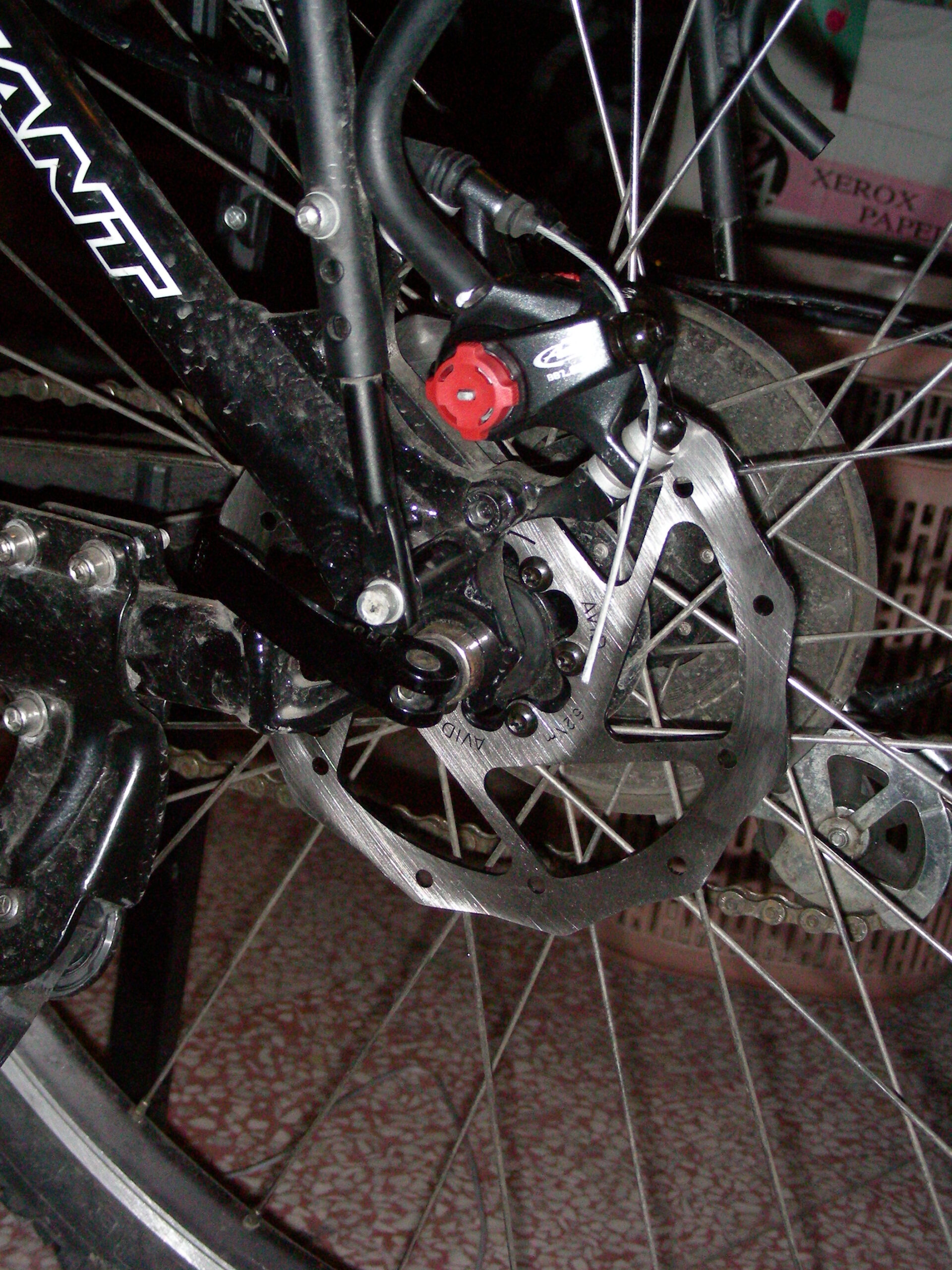
A disc brake moves that work to a steel rotor bolted near the hub. The lever pulls a cable, or it pushes fluid through a hose, and the caliper clamps pads onto the rotor. The tire and the rim stay out of the heat. Road bikes, mountain bikes, and most e-bikes sold now use this layout. A mechanical disc uses a cable. A hydraulic disc uses fluid in a sealed hose, which is why the lever can feel firmer for the same hand effort.
The pad compound decides how that heat is tolerated.
Resin pads, also called organic pads, are a mix of fibers bound with resin. They bite well when they are cool, they stay quieter, and they are the usual first fit on a city bike or a light road bike. On a long hill they are the first to fade. The resin at the surface can glaze, the bite goes away, and more hand pressure does not bring it back until the pad cools.
Metal pads, also called sintered pads, are metal particles pressed together. They keep working after resin pads have given up, they cope better with rain and grit, and they wear the rotor faster. They can squeal when they are cold or wet, and they need a little heat before they feel strong. A semi-metal pad sits between the two: quieter than a full metal pad, and more willing to survive a long descent than a soft resin pad.
New disc pads also need a short bedding-in. A series of moderate stops from a rolling speed leaves a thin layer of pad material on the rotor. Without that layer, the first long hill can feel weak even though nothing is broken. After the rotor cools, a bedded brake should bite again. A rotor that has turned blue or purple has been hot enough to change the color of the steel, and the pads should be looked at before the next descent.
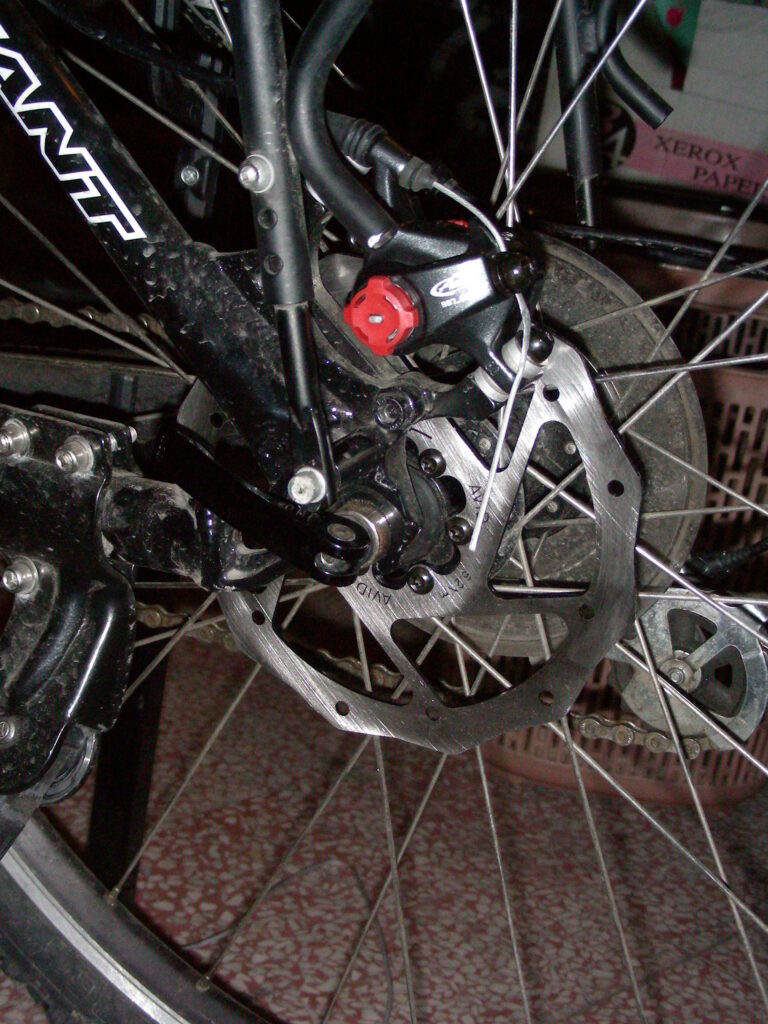
Why an e-bike fades sooner than a light bicycle
Heat follows weight and speed. A heavier machine stores more motion at the same speed, so the brake must turn more of that motion into heat. A faster machine stores much more again, because speed counts twice: twice the speed is four times the energy the brake has to absorb.
A light road bicycle often weighs about 8 to 10 kilograms before anyone sits on it. A pedal-assist e-bike, with its motor, battery, and stronger wheels, commonly weighs about twice that, and a cargo e-bike weighs more still. Add the same rider, and the e-bike is still the heavier vehicle. On the same hill, at the same speed, its brake makes more heat.
Speed stacks on top of that weight. Many e-bikes hold a higher pace into the top of a descent because the motor was still helping on the flat. In Europe a standard pedelec stops assisting at 25 km/h. In the United States a Class 3 e-bike can assist up to 28 mph. The rider then starts the hill already faster than someone on a light bicycle who has been climbing without a motor. The brake has to throw away that extra speed as well as the extra weight.
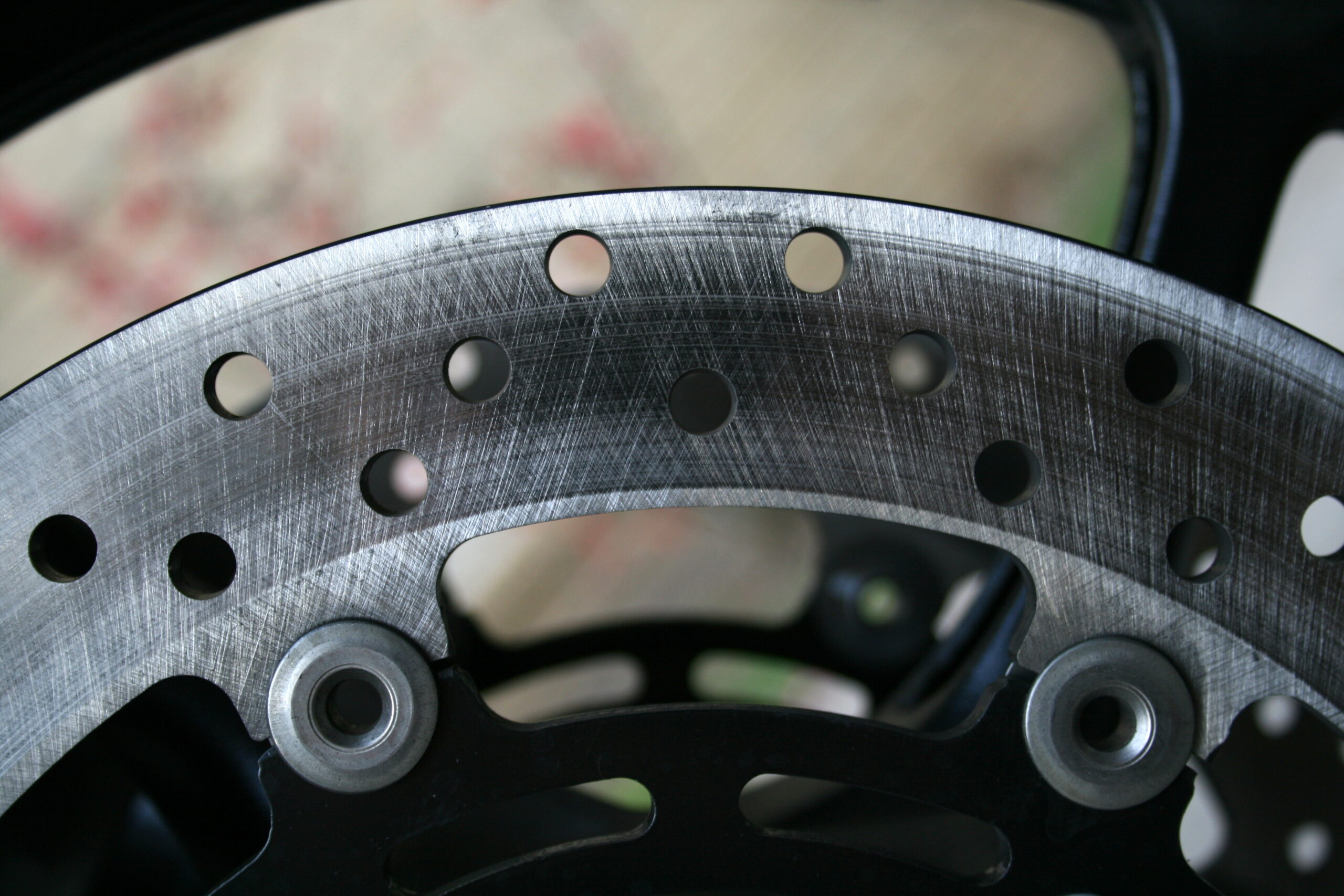
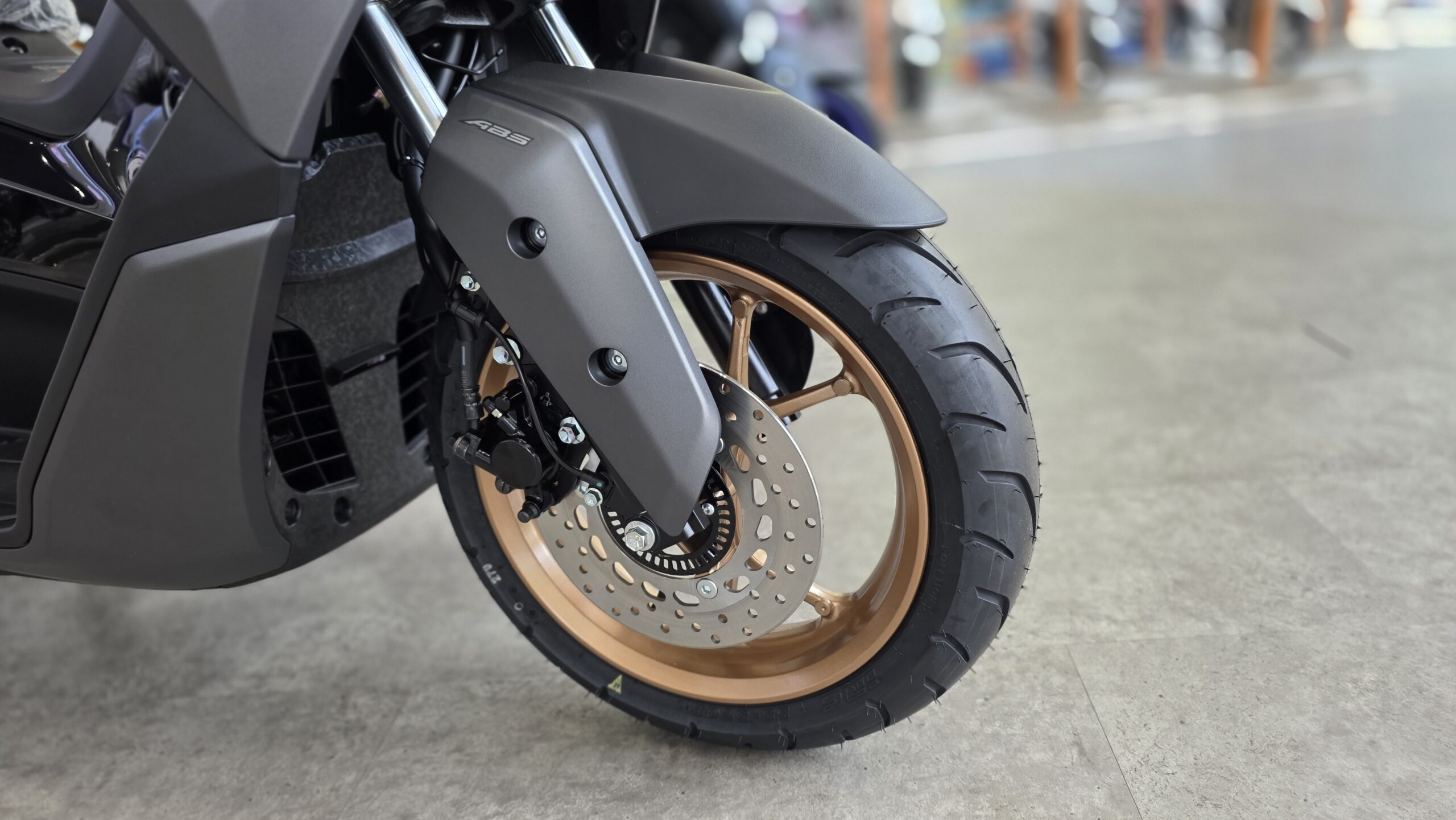
A standing scooter is the smaller comparison. It weighs less than an e-bike, its speeds are lower, and its stops are short. The same hill is a smaller job for a scooter brake than for a loaded e-bike. A motorcycle is the larger comparison. Its front disc does most of the stop, the mass and the speed are in a different class, and that disc can glow after a hard stop. A bicycle rotor is not meant to be ridden that way. If a bike rotor is hot enough to smell or to tint the steel, the ride down should already have paused.
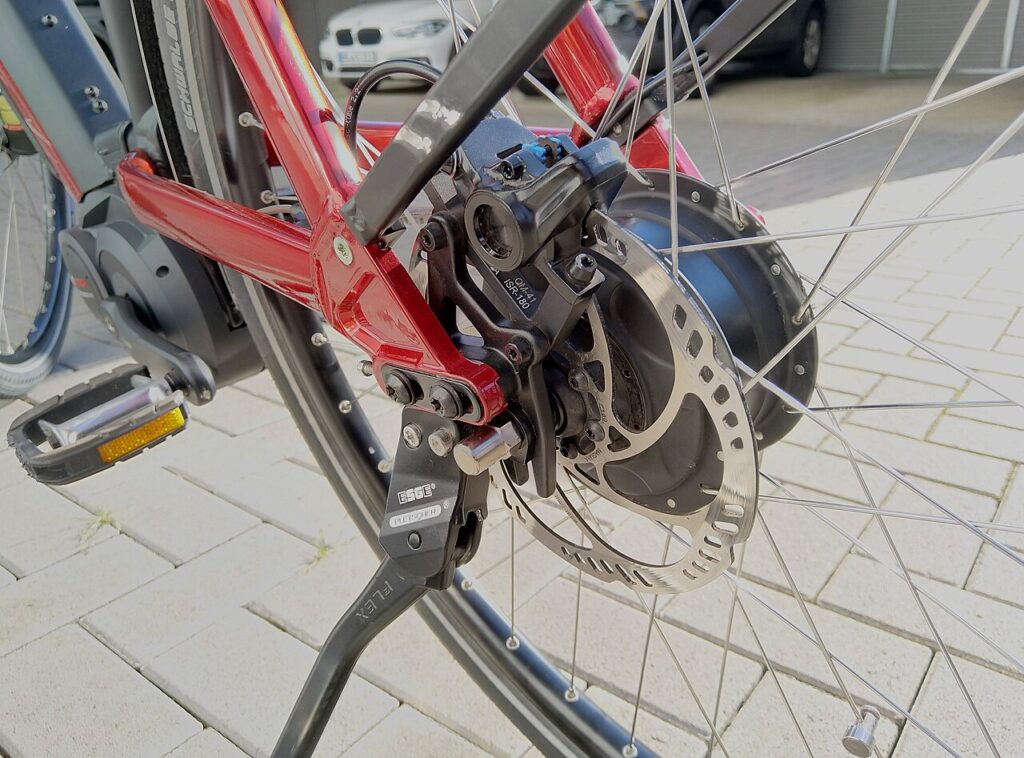
Rotor diameter is how bike makers buy back some of that heat. A 160 mm rotor is common on a light bicycle. A 180 mm rotor, and sometimes a 203 mm rotor, is common on a mountain bike or a heavier e-bike. The larger disc gives the caliper more leverage, and it has more steel to soak up heat before the pad fades. Fitting a heavier e-bike with the small rotor from a light road bike is why some new owners meet fade on the first real hill.
Holding the lever the whole way down removes the only cooling the system gets. Air has to pass over the rim or the rotor while the pads are off it. Short, firm slows, then a release, let the surface shed heat. A constant light drag never lets it shed anything. A lower gear does the same job an engine brake does on a truck, at bicycle scale: the drivetrain takes some of the hill so the brake is not the only thing working.
What you can check without tools
Use your ears, your nose, and the lever. Do not put a finger on the rotor after a descent.
A hot-pad smell that arrives on a long brake and leaves after a few minutes of coasting is the brake doing hard work. The same smell that stays after you have stopped, or a wisp of smoke at the caliper or the rim, means the pad is past a normal descent. Stop and let it cool.
A lever that pulls closer to the grip than it did at the top of the hill is a warning. On a cable brake it can be a stretching cable, a pad worn thin, or heat. On a hydraulic brake, a lever that sinks toward the bar after a long hot descent can mean the fluid boiled and made a bubble, or that air was already in the hose. If the lever firms up again after several minutes of cooling, the fluid got hot. If it stays soft, do not ride the bike down.
A squeal that starts only after a long brake often means a glazed resin pad. A squeal that is there from the first stop of the day, in the wet, is more often a cold metal pad or a rim that is dirty. Those are different problems. The one that grows as the hill goes on is heat.
A bike does not pull to one side the way a car does, because you are balancing it. What you feel instead is one brake grabbing. The front end tucks, or the rear wheel locks and slides, while the other end still rolls. That usually means one caliper is sticking or one pad is down to the metal. A sticking caliper also leaves one rotor much hotter than the other after a short ride on the flat. You can often feel the heat from a few centimeters away without touching it. The cool wheel is the one that was not doing the work.
Look at the rim if the bike has rim brakes. A braking track that has worn concave, or a wear indicator that has disappeared, means the rim is thin. A thin rim runs hotter and can split. On a carbon rim built only for disc brakes, a rim-brake pad should not be there at all. On a carbon rim that is meant for rim brakes, a long dragged descent is still the ride most likely to overheat the braking track. If the braking goes soft on that wheel, walk.
A blue or purple band on a steel disc means the rotor has been hot enough to change color. The bike can still roll after it cools. The pads and the rotor both need a shop to say whether they are still fit to use.
Stop, cool, then decide
Get off the traveled line. A driveway, a wide shoulder, or the inside of a bend where traffic can see you is the place to stop. Keep holding the brake until the bike is fully stopped, then release the lever so the pads are not clamped on a hot surface.
Wait several minutes. Use the time to feel, from a short distance, whether one wheel is far hotter than the other. Squeeze the lever again. Roll a few meters in a safe spot.
Continue only if the lever is firm and the bike slows as it did at the start of the ride. For the rest of the hill, brake in short presses and use a lower gear between them. If the lever is soft, if smoke is still coming off the pad, or if one wheel grabs, the ride down is over. Walk the bike. A soft brake on a slope is not something to test at speed.
Do not pour water on the rotor or the rim to hurry it. A sudden cool on hot steel can bend a thin bicycle rotor. Let the air do the cooling.
What a bike shop checks
A shop can see what a roadside stop cannot measure.
On a disc bike they look at how much friction material is left on the pad. Many pads start with only a few millimeters of that material, and a pad that is down near a millimeter, or down to the backing plate, will fade early and then score the rotor. They look at the rotor for a blue band, for cracks at the bolt holes, and for a thickness below the minimum stamped on the disc. They check that the pistons or the mechanical arm retract, because a caliper that stays on the rotor will cook one wheel on flat ground. They check the bolts that hold the rotor and the adapter.
On a hydraulic brake they confirm the fluid the maker specifies. Some systems use mineral oil. Others use a DOT fluid, which takes on moisture over time and then boils sooner. The shop bleeds the brake with that fluid. Opening the system with the wrong fluid, or with a guess, ruins the seals. That job stays at the shop.
On a rim brake they look at the pad face, the groove that shows remaining pad, the rim track, and whether the cable is sticking in the housing. A cable that does not return will hold the pad on the rim the same way a stuck piston holds a disc pad on the rotor.
They also ask what the bike is. A light bicycle that faded once on an alpine road may only need a pad change and a larger rotor. A cargo e-bike that fades on an ordinary hill may be undersized in the brake, or it may be carrying a load the rotor was never chosen for.
The rotor has to match the weight
The number that belongs to this vehicle is the rotor diameter, not a car-rotor temperature. Light bicycles are commonly built with a 160 mm disc. Heavier e-bikes and bikes that spend time on long descents are commonly built with 180 mm, and sometimes 203 mm. Each step up gives the pad more leverage and gives the steel more mass to absorb the hill. If an e-bike fades and the rotor is the small size used on a much lighter bike, the shop’s first question is whether that rotor is big enough for the load, not whether the rider should pull harder.
The mistake that cooks the brake
The action that makes a hot bicycle brake worse is holding the lever in one steady pull for the whole descent. The pads stay on the rim or the rotor, the heat has nowhere to go, resin pads glaze, and a hydraulic lever can go soft. Short presses, a lower gear, and a full stop when the bite changes are the way down the hill. Pouring water on the hot disc, or riding on after the lever has gone soft, is how a faded brake becomes a cracked rotor or a crash.
Read next: Scooter brakes, and What to do when brakes overheat.