A scooter that smells hot, or that needs more throttle than usual after a wet ride, has a brake that is staying on. Short stops in city traffic can heat a small disc or a small drum even when no single stop felt hard. Smoke, a lever that sinks, or a wheel you can feel heat from without touching it is a reason to park and let the brake cool. A wet commute that leaves the scooter dragging is not something to finish.
A small disc or a drum turns each stop into heat
A scooter brake slows the machine by rubbing, and rubbing turns speed into heat. The parts that rub are small, because the scooter itself is small, so they have little metal in which to store that heat.
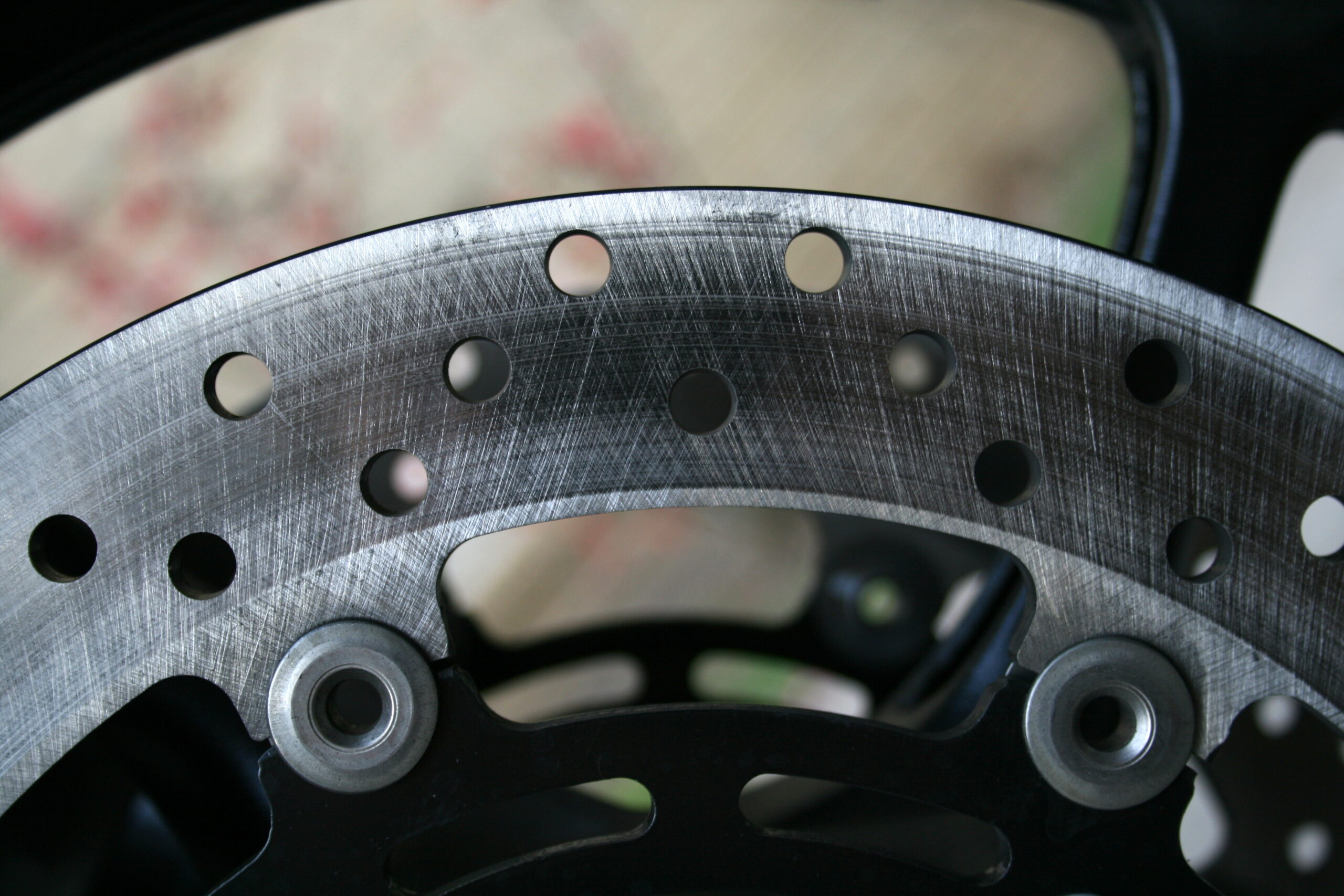
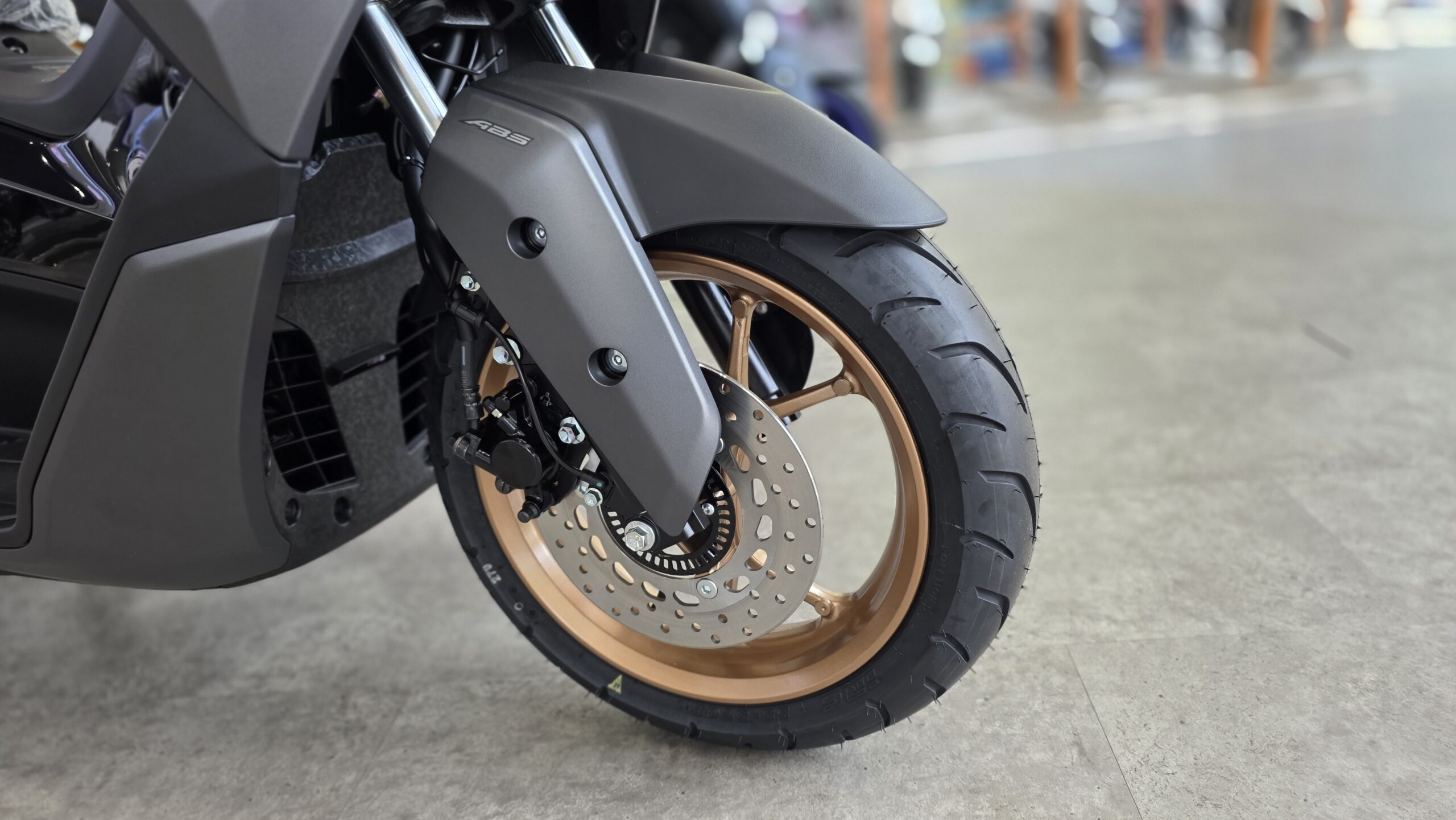
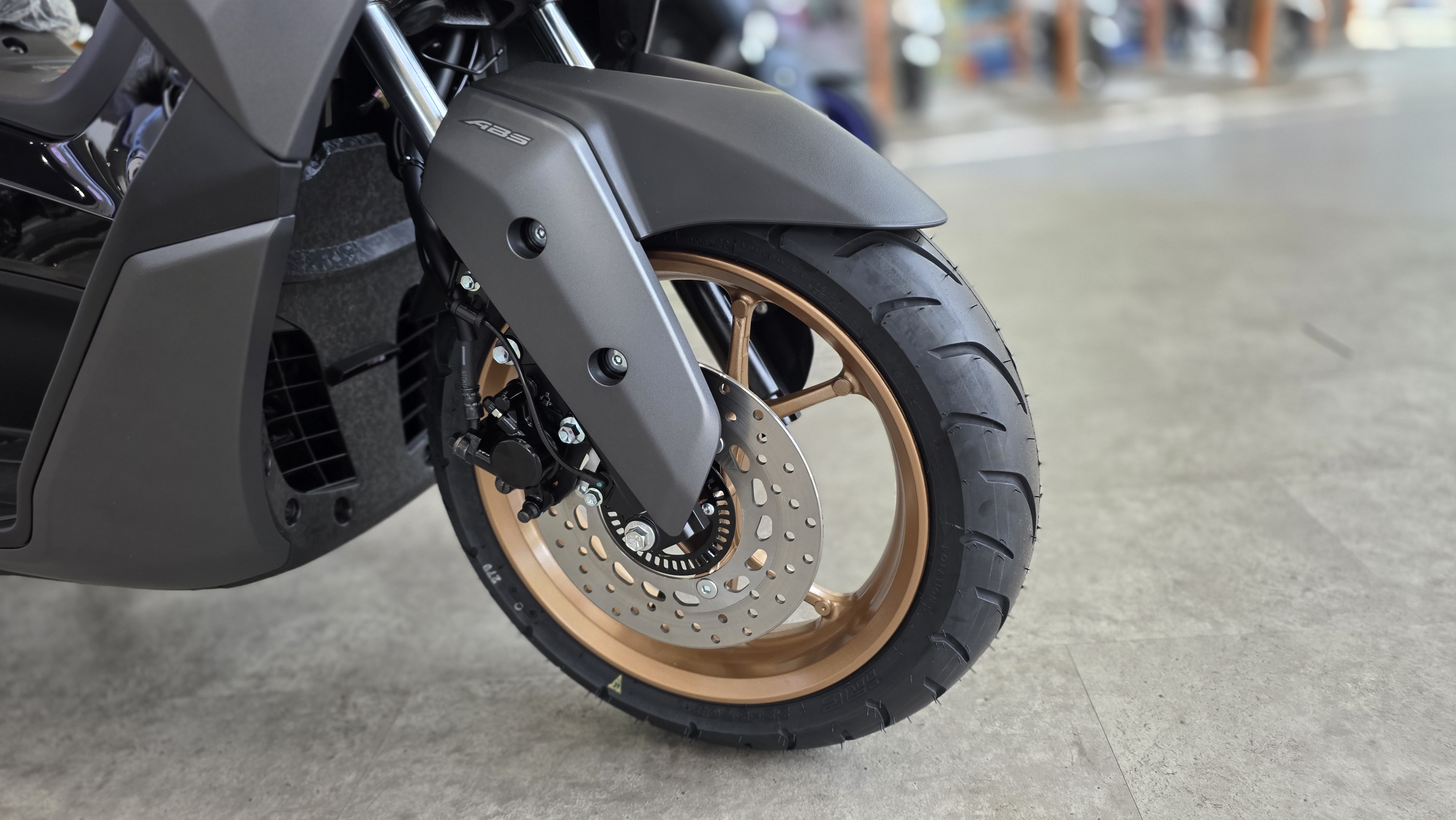
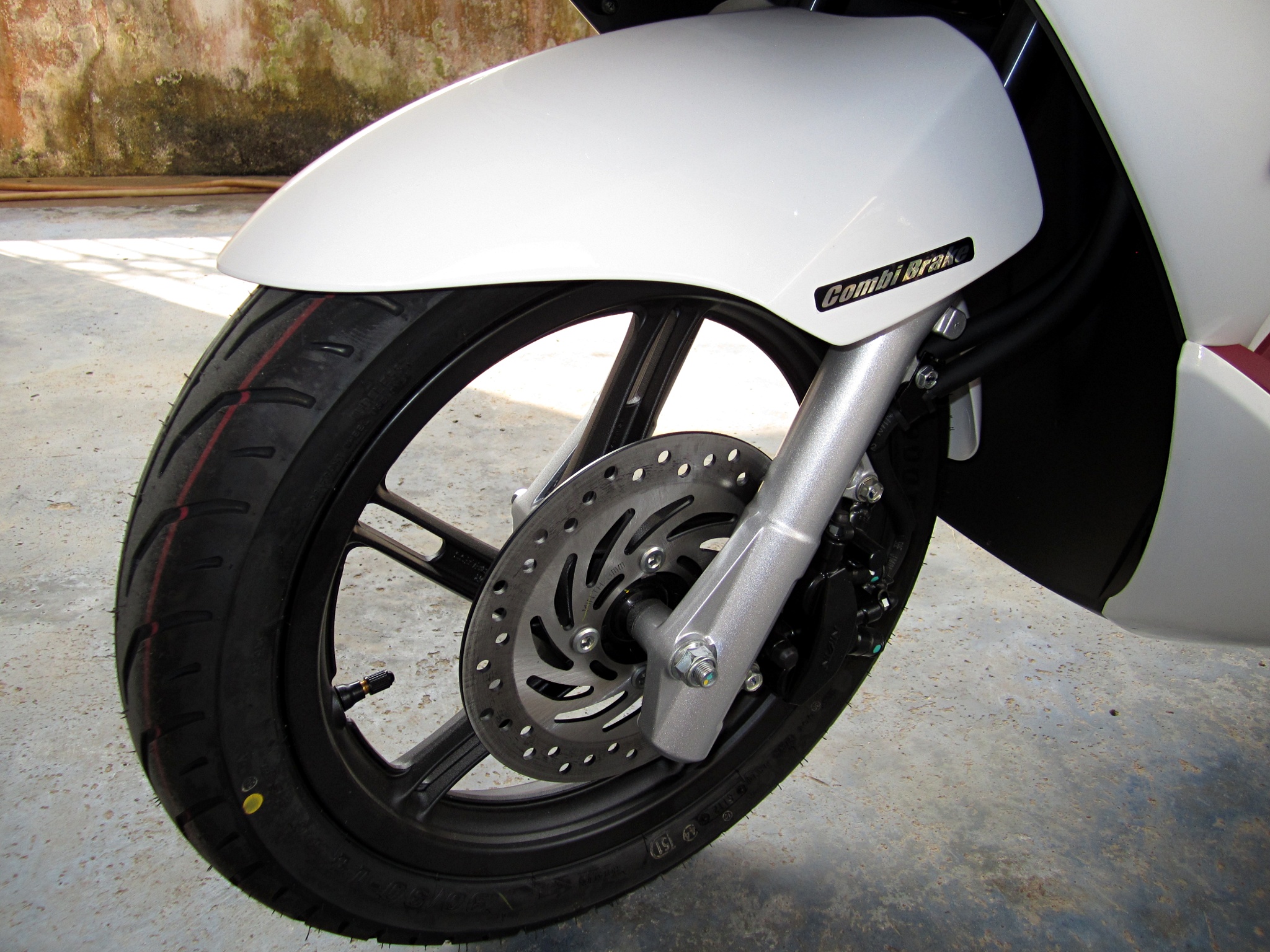
On most 50 cc to 125 cc city scooters the front brake is a single steel disc with a caliper and two pads. The disc is often about 190 mm to 220 mm across. A lever on the handlebar moves a cable, or it pushes fluid through a short hose, and the pads clamp the disc. That clamp is what stops the wheel. It is also what heats the disc. One front disc does most of the stop, because the weight of the rider and the scooter shifts forward as soon as the brake comes on.
The rear brake on that same class of scooter is often a drum about 140 mm across, hidden inside the rear hub. Shoes press outward against the inside of the drum. A cable pulls them. You cannot see the shoes, and air cannot reach them the way it reaches a disc. The drum holds heat, and it holds water after rain.
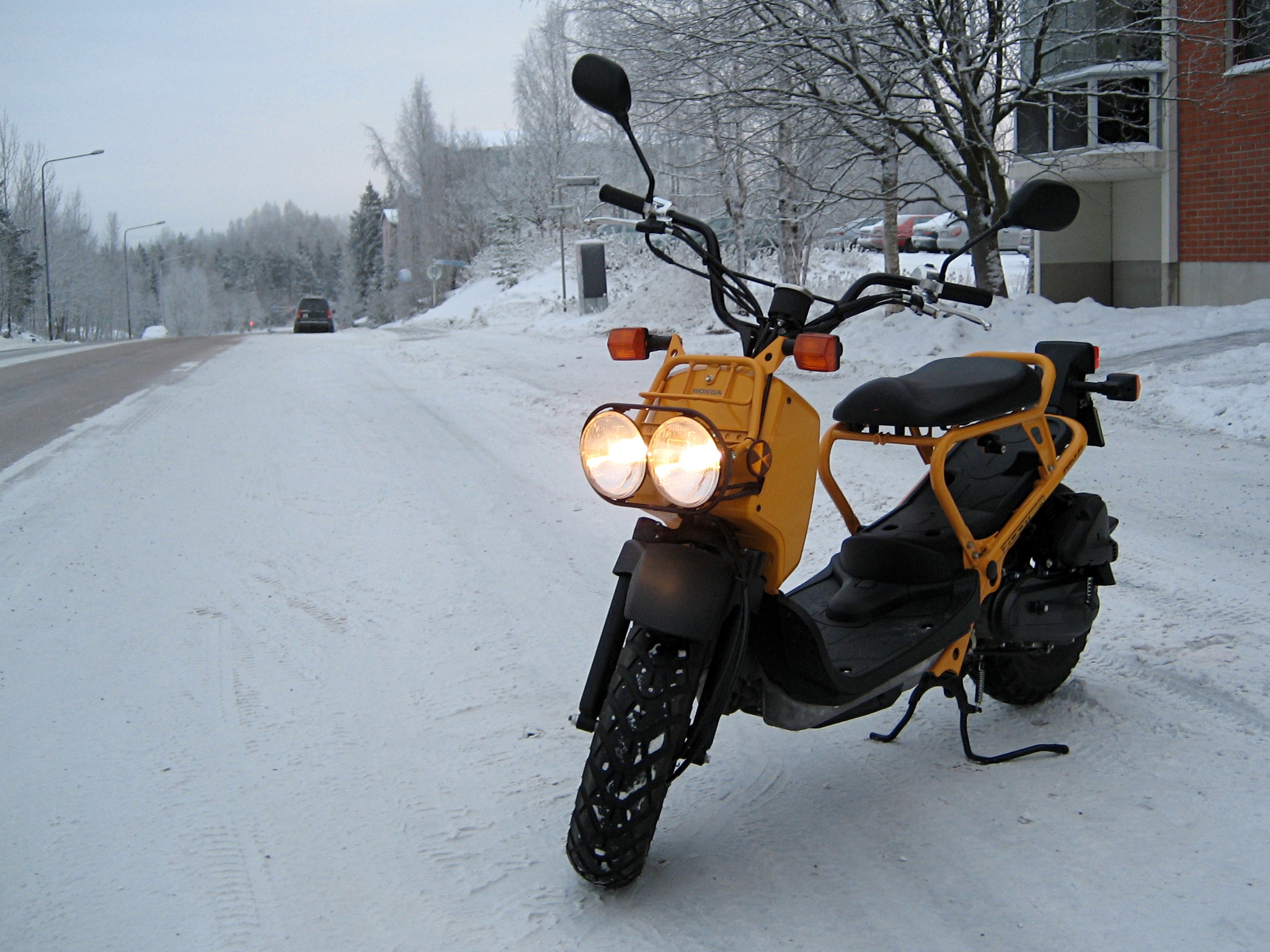
Some scooters link the two ends. One lever applies the rear shoes and also a share of the front disc, so a rider who uses only the left hand still gets some front brake. The levers can feel normal while one end is doing more work than the other. A larger maxi-scooter may have a disc at both wheels, and some newer ones add an anti-lock system. The heat problem is the same shape: a small friction surface, used over and over, with little time to cool.
Resin pads on a scooter disc bite well in gentle town riding and stay quieter. They glaze sooner if the disc is kept hot. Sintered pads tolerate more heat and more water, and they wear a thin scooter disc faster. A drum shoe that has glazed does the same thing the rider feels as a lever that travels farther for less slowing.
City stops heat a scooter differently than a bicycle or a motorcycle
A scooter lives in repeated stops. Lights, junctions, and gaps in traffic mean a stop from about 30 to 50 km/h, then another, then another. Each stop is milder than an emergency stop. The disc still has to turn that speed into heat, and the next stop often arrives before the small disc has given the heat back to the air. Ten ordinary stops in a short errand can leave the front disc hotter than one harder stop followed by a long roll with the lever released.
The disc is small for a reason. It fits a 10-inch or 12-inch wheel, and it keeps the scooter light. Less steel means less heat storage. Airflow at scooter speed is modest, so the disc does not get the cooling a larger wheel gets on an open road. A rider who rests two fingers on the lever through traffic keeps the pads touching. That light contact never lets the disc cool. It is the same continuous rub as holding a brake down a hill, done at city scale.
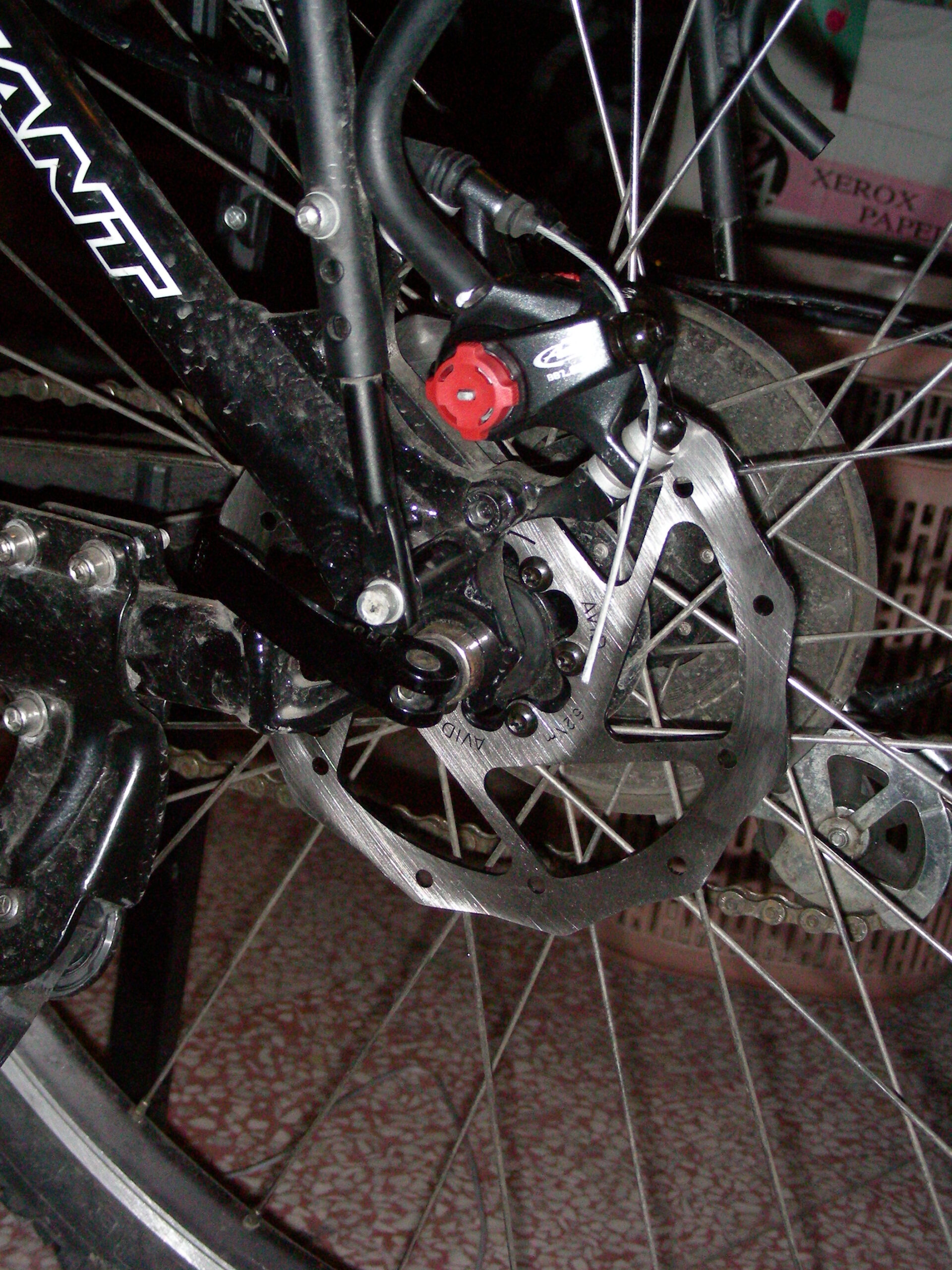
A bicycle is the smaller comparison. A light bicycle weighs less than a scooter and usually rolls slower in traffic. Its disc, when it has one, is often about 160 mm, and the stops are fewer. The same hill that fades a bicycle brake is a long, uninterrupted rub. The scooter’s problem is usually the opposite pattern: many short rubs, close together, on a disc with little mass. An e-bike that is heavy can fade on a descent for the same reason a loaded scooter can smell hot after a string of lights. The bicycle article on this site is about that long-hill case. The scooter case is the commute.
A motorcycle is the larger comparison. Most of a motorcycle’s stop is also the front disc, and that disc is commonly around 300 mm, with more steel and more air passing over it. After a hard stop that larger disc can glow, and a soft lever can mean the fluid has boiled. A scooter disc is unlikely to be ridden to that spectacle in ordinary town use. What it does instead is stay warm all the way across the city, then drag. If a scooter disc has tinted blue, or if smoke is coming off the caliper, the ride has already gone past a normal commute. Park it.
Rain changes the picture. Water on the disc makes the first stop of a wet street longer, until the pads wipe the disc dry. Water inside a drum stays longer, because the drum is closed. A cable that took in water can rust inside the housing and stop the arm from returning. The shoes or the pads then stay against the braking surface after the lever is out. The rider feels that as a scooter that will not roll freely, an engine that needs more throttle to hold the same speed, and a hot smell that arrives without a hard stop. One wheel, usually the front if the disc is stuck or the rear if the drum is stuck, is hotter than the other after only a few minutes.
What you can check without tools
Use the rollout, the smell, and the heat you can feel from a short distance. Do not put a finger on the disc or the drum after the ride.
Roll the scooter a few meters with both levers released, on a flat place, engine off if you can do that safely. It should roll. A scooter that stops itself, or that you have to push hard, has a brake applied. Note which wheel scrubs. A front disc that is touching will often tick or hiss as the wheel turns. A rear drum that is touching feels like the scooter is held from behind.
A hot smell during a string of hard city stops can be the brake working. The same smell a few minutes after a gentle wet ride, with the levers released, is a brake that did not let go. Smoke at the caliper or at the rear hub means stop. Do not ride it to the shop.
A lever that pulls closer to the grip than it did at the start of the week can be a stretched cable, a worn pad or shoe, or heat. On a hydraulic front brake, a lever that sinks toward the bar after a hot commute can mean the fluid boiled. If the lever firms up after the scooter has sat, the fluid got hot. If it stays soft, do not ride on. A cable lever that feels normal while the scooter still drags means the cable or the arm is not returning, even though the lever itself came back.
Scooters do not pull sideways the way a car does. What you feel is the bar needing a steady correction, or the rear stepping out on a wet corner because that drum is grabbing. After you stop, compare the two wheels from a few centimeters away. The hot one is the one that was rubbing. A blue or purple band on the front disc means the steel has been hot enough to change color. The scooter can still roll once it cools. The pads and the disc need a mechanic before the next wet day.
Park, cool, then decide
Leave the traffic lane. A side street, a petrol-station apron, or a wide shoulder is the place. Hold the brake until the scooter is fully stopped, then release both levers so the pads and shoes are not clamped on a hot surface.
Wait several minutes. Roll it again with the levers off. Continue only if it rolls freely, both levers are firm, and the hot smell has gone. For the rest of the trip, brake in short presses and take your fingers off the lever between them. If smoke continues, if a lever is soft, or if one wheel still scrubs, the trip ends there. Wheel it, or have it collected. A brake that is already dragging will only get hotter in the next kilometer.
Let the air cool the disc and the drum. Do not pour water on either one. A sudden cool can bend a thin scooter disc, and water in a hot drum is how shoes stick again tomorrow.
What a mechanic checks
A shop can see the parts a rider cannot measure from the saddle.
On the front disc they look at how much pad material is left, and whether the pads wore on a slant, which is a sign the caliper was not square. They measure the disc against the minimum thickness marked on it. A thin disc heats faster and can crack at the bolt holes. They check that the piston or the mechanical arm lets the pads pull back. A piston that stays out, or a slider pin that has seized after wet riding, is the usual reason one front brake drags. They look at the cable or the hose, and at the fluid if the brake is hydraulic. Scooter front brakes that use fluid need the fluid the maker names. Opening the system with a different fluid damages the seals. That job stays at the shop.
On the rear drum they pull the wheel or the cover and look at the shoes, the springs, and the cam that pushes the shoes out. Shoes with a glazed face, or a cam that does not return, explain a scooter that binds after rain. Water and road dust inside the drum are common. The shop also checks that the cable slides in the housing. A rusty cable can hold the shoes on after the lever has already come back to the bar.
They ask how the scooter is used. A disc and a drum that are the right size for a solo city rider can still overheat if the scooter carries a passenger and a full load through hills and traffic every day. The fix is then the dragging part, and a honest look at whether the brakes match the load, not a harder pull on the lever.
The front disc and the rear drum are a small pair
The measurement that belongs on a scooter is the size of that pair. On many 50 cc to 125 cc city scooters the front disc is about 190 mm to 220 mm across, and the rear drum is about 140 mm. A light bicycle disc is often 160 mm and is asked to stop less weight. A motorcycle front disc is commonly around 300 mm and has more steel for a harder, faster stop. The scooter sits between them: more mass than a bicycle, less rotor than a motorcycle, and a riding pattern of short stops with short gaps. That is why a commute can heat the brake, and why a drag after rain heats it even when the rider is not braking on purpose.
The mistake that keeps the brake on
The action that makes this worse is riding on after a wet trip once the scooter no longer rolls freely. The pad or the shoe stays in contact, the small disc or the closed drum cannot shed the heat, and the smell becomes smoke. Fingers resting on the lever through every block do the same job more slowly. Park it, let it cool in the air, and have the sticking part freed before the next ride.
Read next: Bicycle and e-bike brakes: rim, disc, and why they fade on a long hill, and Motorcycle brakes, and why a front disc can glow after a hard stop.