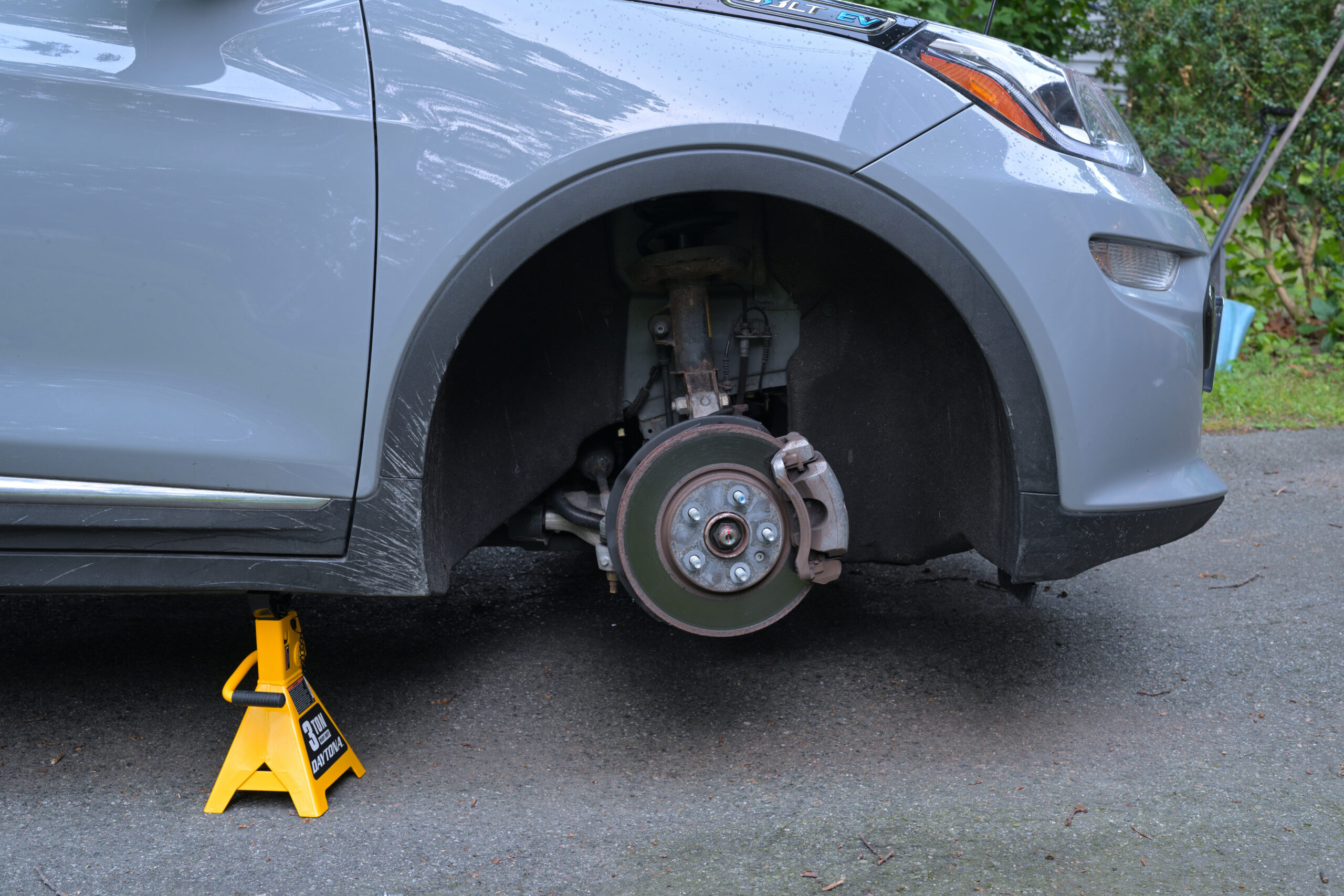
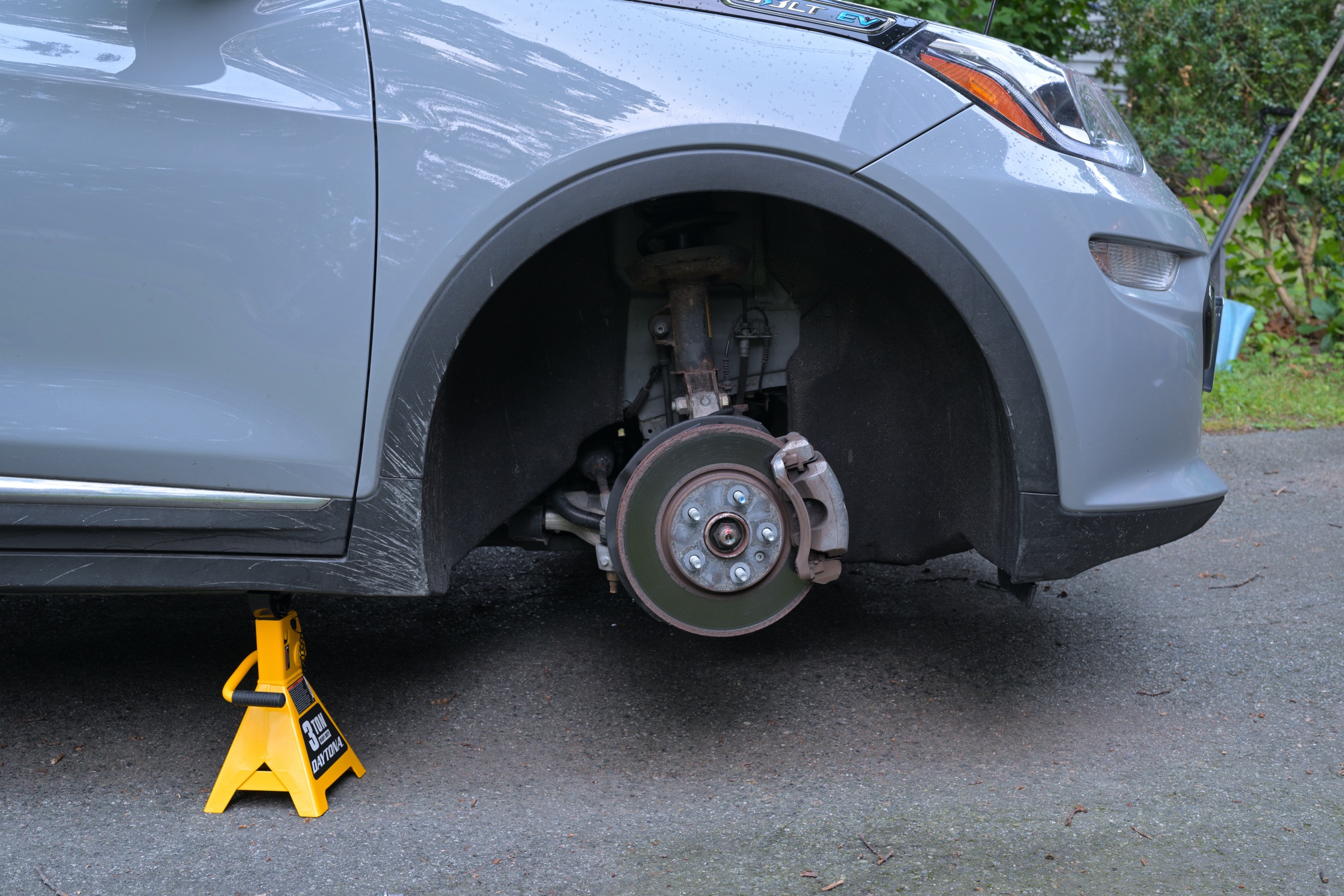
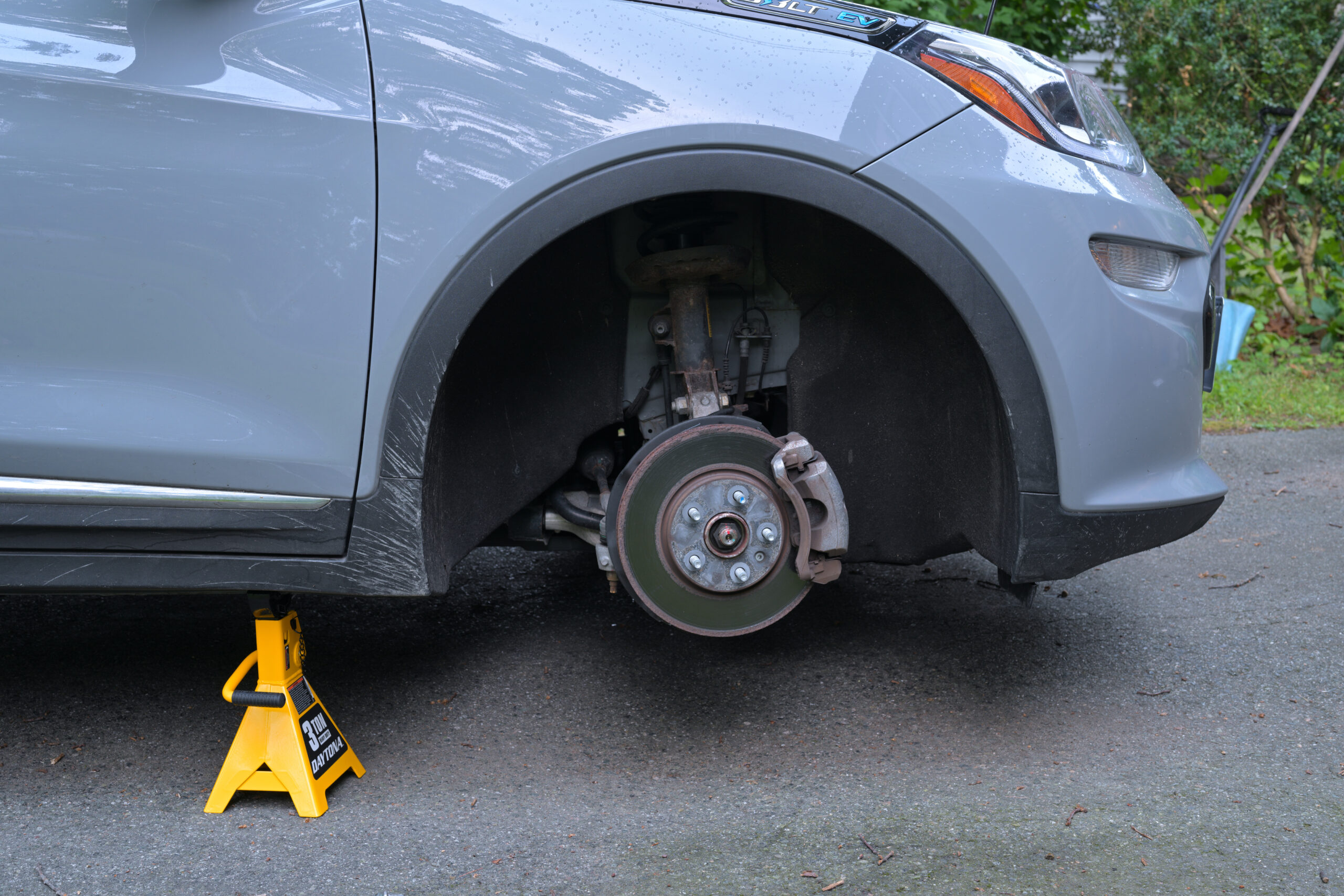
A short hot smell in the first days, or across the first few dozen moderate stops, while the pedal stays firm and nothing smokes, is usually new pads bedding in. A smell that hangs after you park, smoke at a wheel, a soft pedal, or a pull to one side is not bedding. That is a reason to stop driving and let the brakes cool, then get the car looked at if the pedal does not return to normal.
What bedding smell actually is
New friction pads and a clean rotor do not start with a finished mating surface. During a series of ordinary stops from moderate speed, the pad lays a thin transfer layer of its own material onto the rotor face. That layer is what the next stop rubs against. While it forms, the materials can give off a brief chemical smell. The pedal should still feel firm, and the car should still stop in a straight line.
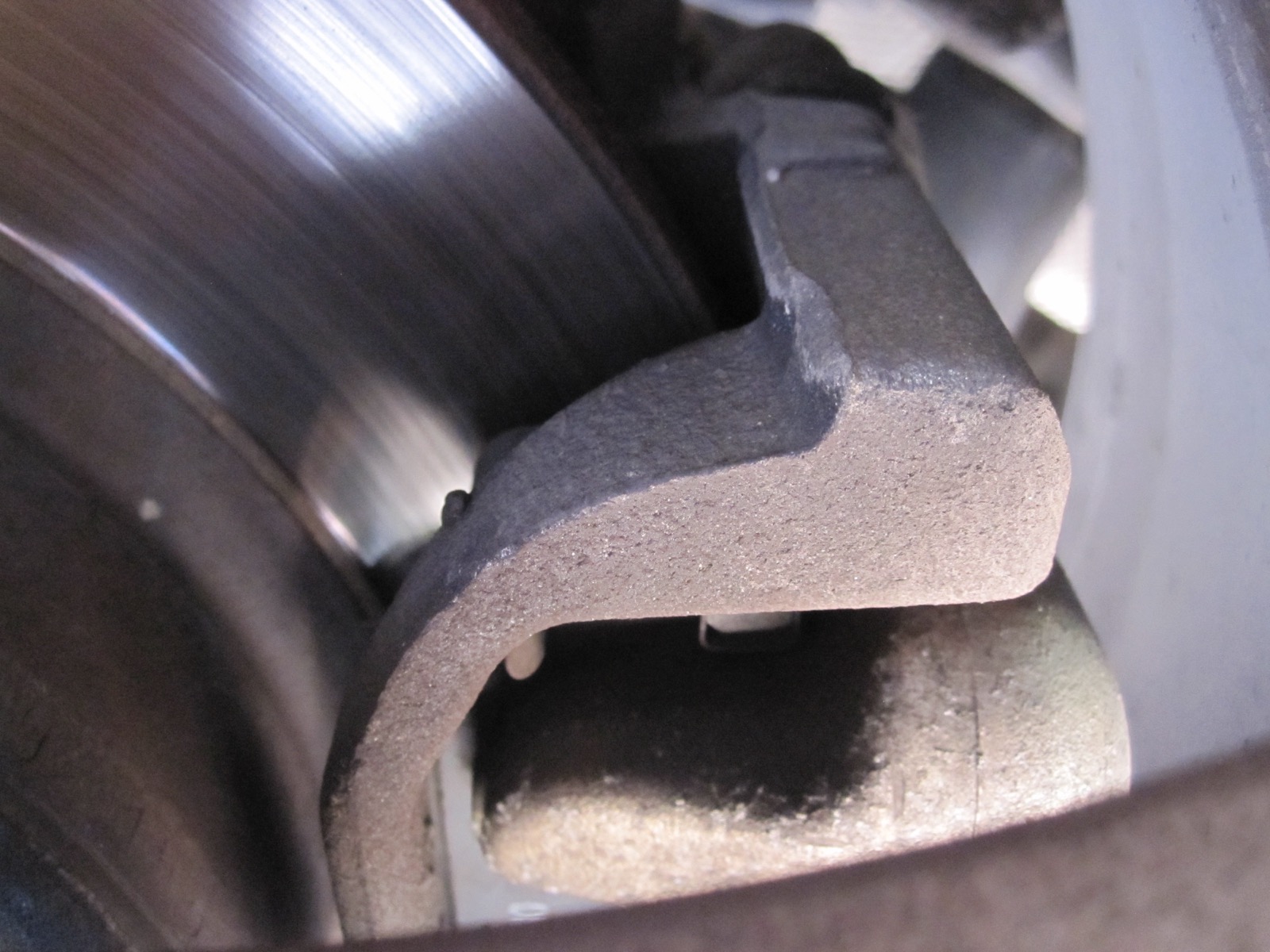
The parts doing that work on a hatchback, sedan, or compact SUV with hydraulic discs are the pads, the caliper that squeezes them, the vented front rotor that absorbs most of the heat, and the brake fluid that transmits foot force. Bedding is not a hard mountain descent with the pedal held down. It is a run of moderate stops with time between them so the rotor can cool in moving air.
One normal stop from about 60 mph typically raises front-rotor temperature by roughly 150–250°F. That rise can smell slightly. It does not make the rotor glow. The smell from bedding should fade after the car sits for a few minutes with the pads off the disc.
How other vehicles compare
A motorcycle with a new front disc can also smell while the pads bed. After a hard stop, a soft lever can mean the fluid boiled and left a compressible bubble. Do not paste car numbers onto that bike: its mass, lever ratio, and fluid volume are a different system. See our note on motorcycle front-disc work and a soft lever for that scale.
A full-size SUV carries more weight, so the same bedding stops dump more energy into the front rotors. A new or newly repaired SUV that smells on a gentle commute can still be bedding if the pedal is firm and there is no smoke. Smoke, a sinking pedal, or a pull is not bedding on an SUV any more than it is on a light car.
Heat follows kinetic energy, not the badge on the hatch. A light car slowed from 60 mph can make more braking heat in one stop than a heavy vehicle slowed from 20 mph. Speed matters more than a casual glance at curb weight.
Smell, smoke, and pedal: the roadside decision
Use these outcomes as a decision table. You do not need tools for this first call.
Short smell that fades after a few minutes, firm pedal, car stops straight: treat it as bedding. Keep stops gentle. Leave extra following distance so you are not riding the pedal in traffic.
Smell that remains after the car is parked, smoke at one wheel, a pedal that sinks under steady pressure, a pull to one side, one wheel much hotter than the others after a short drive, or a blue tint on the rotor face: that is not bedding. End the trip if braking does not feel normal after a cool-down.
What to do at the roadside
If the smell is brief and the pedal is firm, continue gently. Space out your stops. Do not drag the brakes downhill “to bed them in.” That is not bedding; that is a continuous heat load. Long descents and holding the pedal are a separate problem we cover for bikes in why bicycle and e-bike brakes fade on a long hill; the same idea—do not ride the friction surface the whole way down—applies to cars, and a dedicated car piece on downhill riding the pedal is not live on this site yet.
If smoke appears, the pedal goes soft, or the car pulls, pull over where traffic can see you. Release the pedal so the pads are not clamped on a hot rotor. Let air cool the brakes for several minutes. Roll a few meters in a safe spot and feel the pedal again. If bite and firmness return, drive only as far as you must, gently, and schedule a check. If they do not return, end the trip. Do not pour water on a hot rotor; a sudden quench can warp the disc.
What a mechanic looks for
A shop separates a normal bedding smell from a real fault.
They check whether the pads actually bedded or glazed. A glazed face looks glassy and can smell and squeal without a proper transfer layer. They measure rotor thickness against the minimum stamped on the disc. They look for a caliper that sticks: one wheel hot after a short flat drive is the classic pattern. If the pedal sank, they inspect fluid condition and whether air or boil-over left the pedal spongy. Opening the hydraulic system is not a DIY roadside job; that stays with the shop.
New rotors should arrive with the braking surface clean of machining oil. If a shop left anti-corrosion coating on that surface, the first stops can smell strongly. That coating smell is a shop-side finding to distinguish from bedding, not a guide for stripping discs at home.
How hot is too hot for “just bedding”
Several hard stops in a row can push rotors into the 600–800°F range, where steel can glow. Bedding does not require that regime. A bedding smell should be gone after the car sits a few minutes. If you are smelling brakes after every gentle commute for days, or the smell never clears in the garage, treat it as a problem, not a process.
Pad compound changes the story a little. Semi-metallic pads usually tolerate more heat than organic pads. Organic pads often smell more while they bed because more resin and fiber are cooking off as the transfer layer forms. Either type can still smoke or fade if a caliper sticks or if someone mistakes a soft pedal for “new brakes.” What brake glow looks like on a car is a topic we plan to cover separately; it is not a live page here yet, and you should not need a glowing disc to decide that smoke plus a soft pedal is unsafe.
The mistake that makes it worse
The harm comes from one decision: treating smoke or a sinking pedal as “just the new brakes” and keeping the trip going. That choice keeps heat in a stuck caliper, cooks fluid, glazes pads, and can leave you with little braking when you need it. A short bedding smell with a firm pedal is ordinary. Smoke, a soft pedal, a pull, or a smell that will not leave after parking is the line where you stop.
Read next: Motorcycle front disc and soft lever, and bicycle and e-bike fade on a long hill. Also see hatchback, sedan, and compact-SUV brakes, what brake glow looks like on a car, and downhill driving, riding the pedal, and a soft pedal.