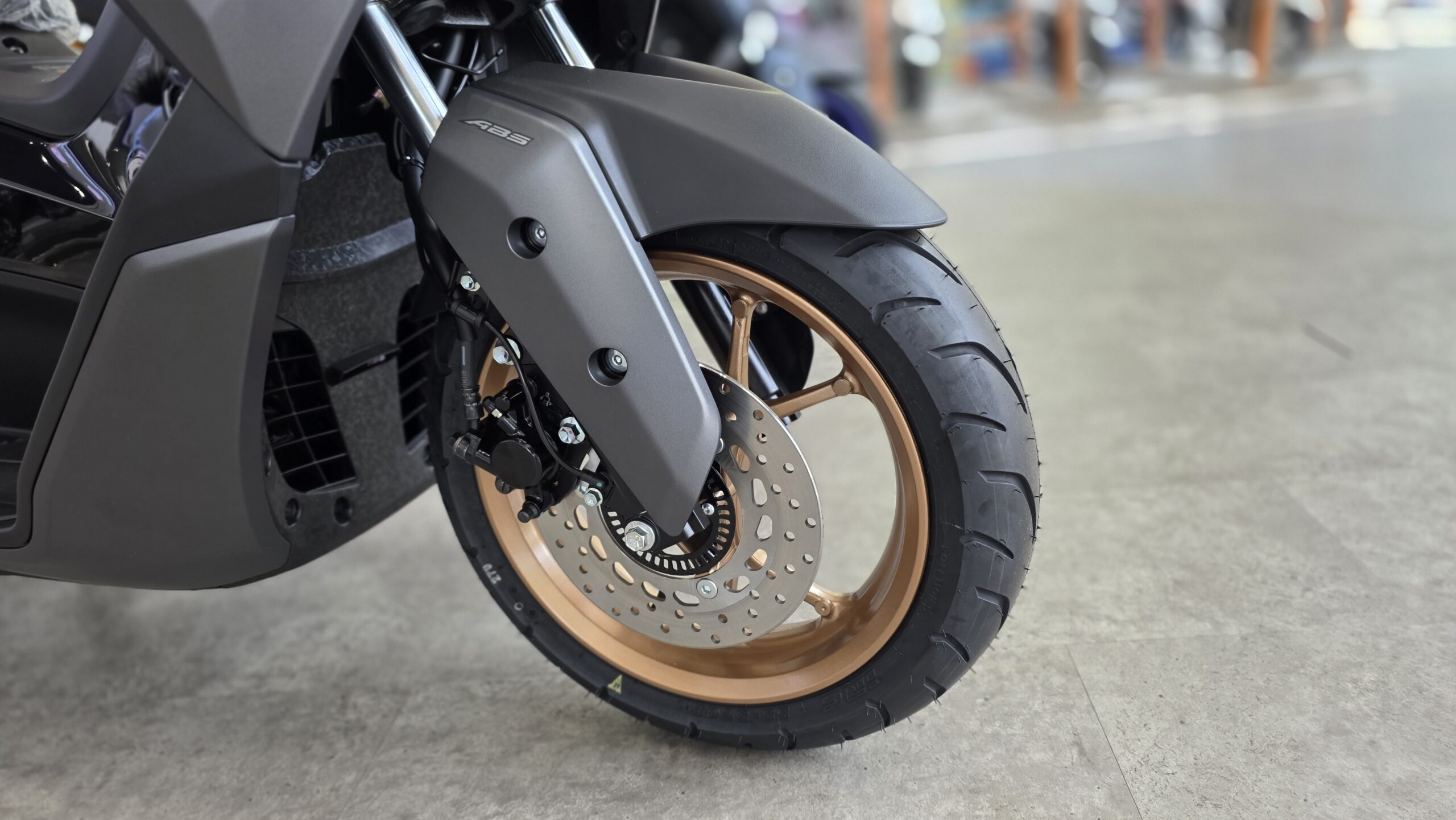
A motorcycle’s front disc does most of the stopping. After a hard stop, or after a caliper that will not let go, that disc can glow dull red. A lever that sinks toward the bar is not a normal feel. Park the bike, let the brake cool in the air, and do not ride on if the lever stays soft or smoke continues.
Friction at the front disc
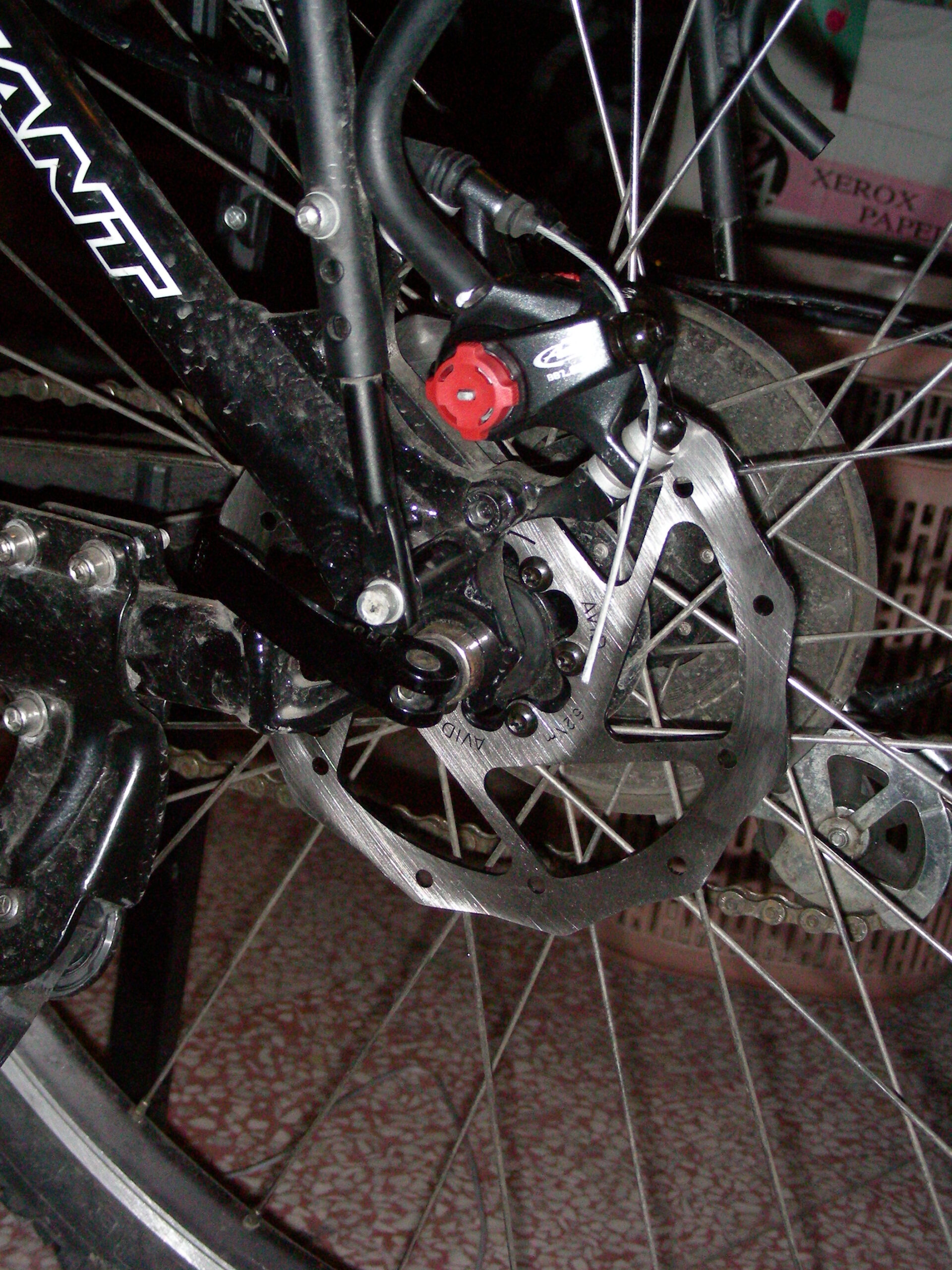
A motorcycle brake turns speed into heat by rubbing a pad against a spinning disc. The right-hand lever pushes fluid from a master cylinder through a hose into one or two front calipers. Pistons in those calipers press the pads onto the disc or discs. That clamp is what stops the front wheel. It is also what heats the steel.
Most of the stop belongs to the front for a simple reason. As soon as the rider squeezes the lever, weight shifts onto the front tire. The front tire can accept more braking force. The rear tire unloads. A rear disc or a rear drum still matters for stability and for low-speed control, but on a hard stop from road speed the front does the large share of the work. On many road bikes that share is most of the stop. The rear is there to settle the bike, not to match the front disc for heat.
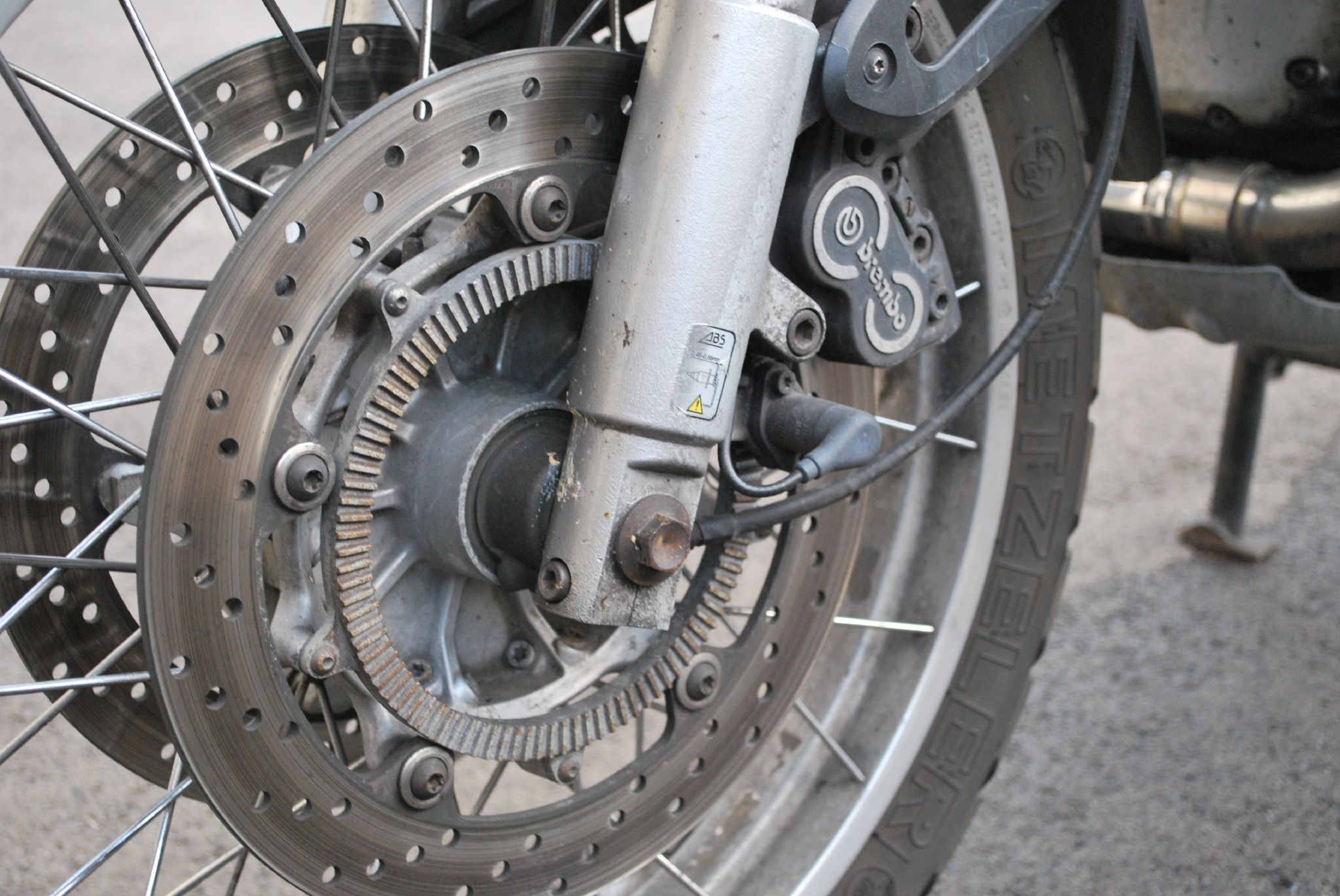
A modern street bike often carries one or two front discs about 300 mm to 320 mm across, with a thinner rear disc. A four-piston front caliper is common on sport and sport-touring bikes. Fluid is almost always a DOT grade that absorbs water over time. Fresh fluid resists boil. Old, wet fluid boils sooner when the caliper gets hot. A soft lever after a hard stop or a long descent is often that boil: liquid becomes vapor, vapor compresses, and the lever travels farther for less bite.
Pads matter. Resin pads bite well when they are cool and stay quieter. Sintered metal pads keep working after the disc is hot, and they cope better in rain. They wear the disc faster and can squeal when cold. New pads need a short bedding-in: a series of firm stops from a rolling speed, then a cool-down. Without that layer of pad material on the disc, the first hard stop can feel weak even though nothing is broken.
Glow is heat made visible. Cast-iron and steel discs begin to show a dull red when the surface is hot enough, after a hard stop from speed, after repeated mountain braking, or after a caliper that keeps the pads on while the wheel is still turning. A track bike under race pads can glow and still be inside its design. A road bike that glows on an ordinary street, or that glows on one side only after a short ride, is past a normal stop. A blue or purple band left on a cold disc is the color change from that heat.
Smaller than a car, larger than a scooter
Heat follows weight, speed, and how long the pads stay on the disc. A motorcycle sits between a scooter and a car.
A city scooter is the smaller comparison. Its front disc is often about 190 mm to 220 mm, and its stops are short and frequent in traffic. The scooter article on this site is about that pattern: many mild stops, a small disc, and a brake that can drag after rain. A motorcycle disc is larger, the speeds are higher, and a single hard stop from highway speed puts far more energy into the steel. Twice the speed is four times the energy the brake must turn into heat. That is why a motorcycle front disc can glow after one serious stop while a scooter more often smells hot after a string of lights.
A hatchback or a compact car is the larger comparison. The car spreads the stop across four wheels, with large front rotors and a pedal instead of a hand lever. The motorcycle concentrates most of the stop into one or two front discs the rider can see. The car’s rotors are thicker and have more mass. The motorcycle’s discs are thinner and open to the air, which helps them cool once the pads come off, and which also means a dragging caliper will cook one disc in a short ride. The car article on brake glow belongs to that four-wheel system. This page is about the front disc the rider watches.
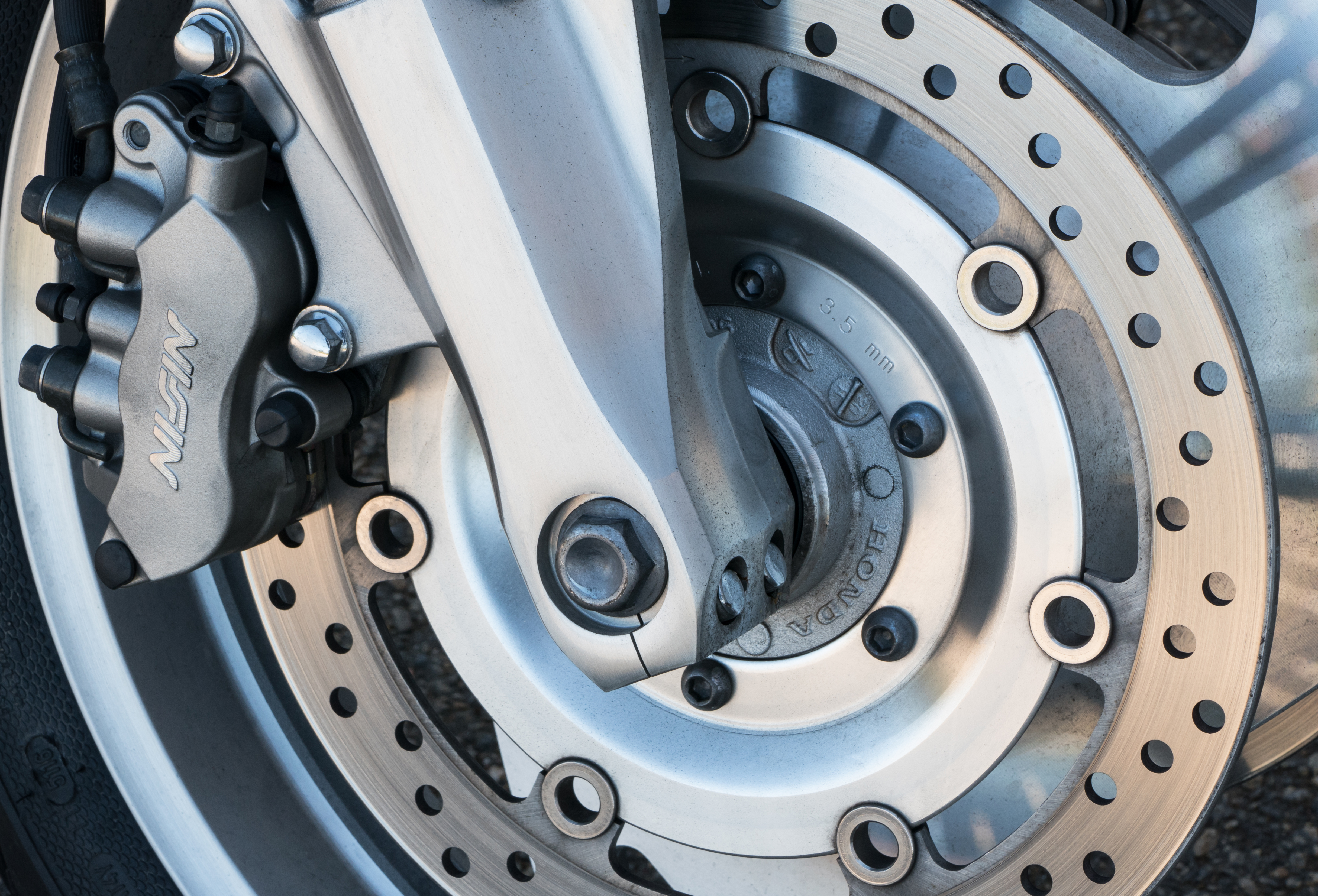
Riding style changes the heat as much as the machine. Short, firm applications, then a release, let air pass over the disc. Holding the lever lightly down a grade keeps the pads on the steel. The disc never cools. That is how a road bike arrives at fade without a race session: a firm lever at first, then a longer stop for the same squeeze, and finally a lever that sinks if the fluid boils. A sticking caliper does the same job without the rider asking for it. The piston or the slider stays out, the pad rubs, one disc heats, and that disc can glow while the other side stays dark.
What you can check without tools
Use the lever, the smell, and what you can see. Do not put a finger on a hot disc.
A hot-pad smell after a hard stop that fades after a few minutes of rolling with the lever released can be a normal cool-down. The same smell that stays after a gentle ride, or smoke at one caliper, means a pad is still rubbing or the stop was far past normal. Park it.
A lever that sinks toward the bar, or that needs a pump to firm up, is a soft lever. After a hot descent or a string of hard stops, that often means the fluid boiled. If the lever firms again after the bike has sat and cooled, the fluid got hot. If it stays soft, there may be air in the hose, a leak, or fluid that is no longer fit to use. Do not ride on with a soft lever. A lever that feels normal while one wheel is smoking means the caliper is stuck even though the lever returned.
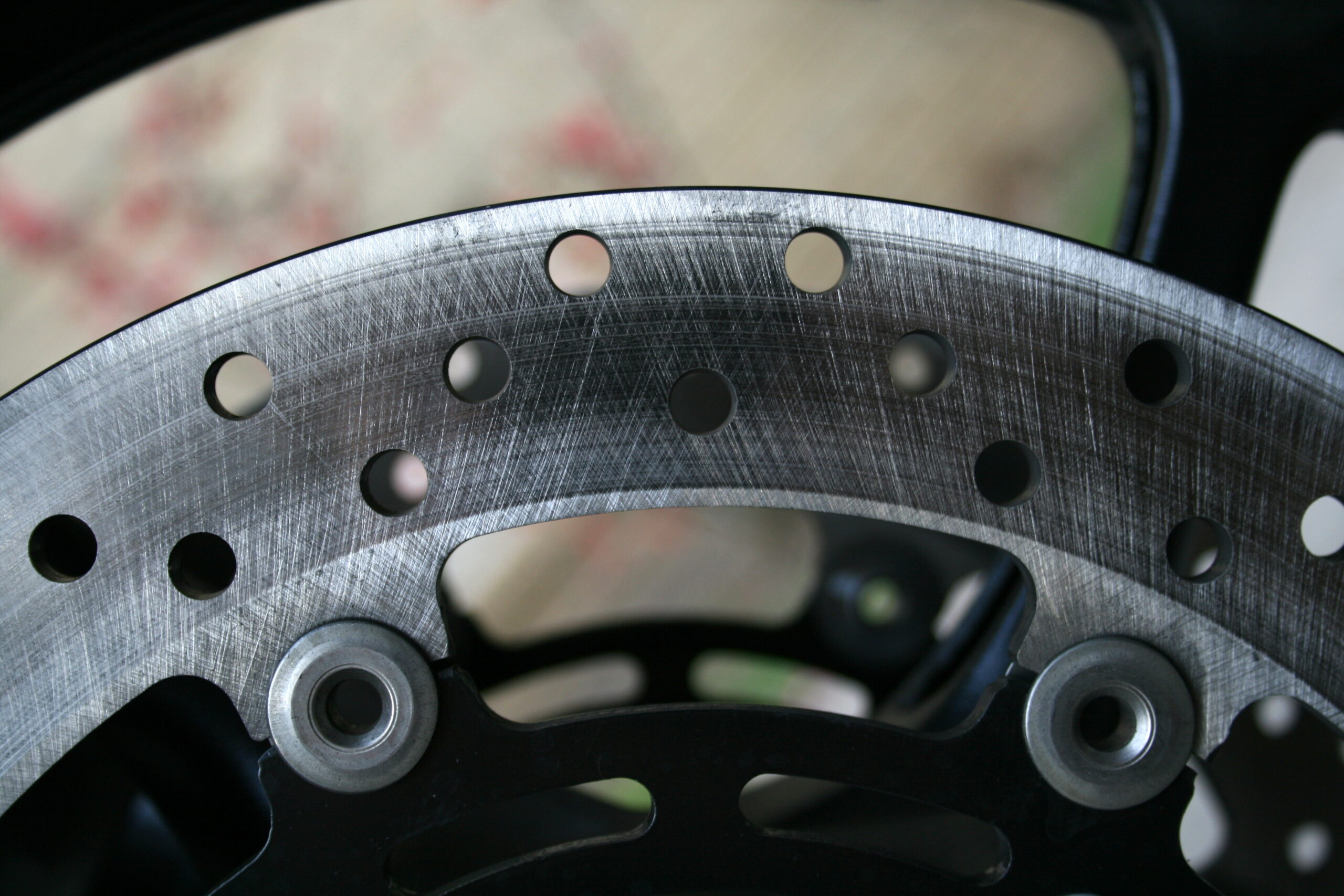
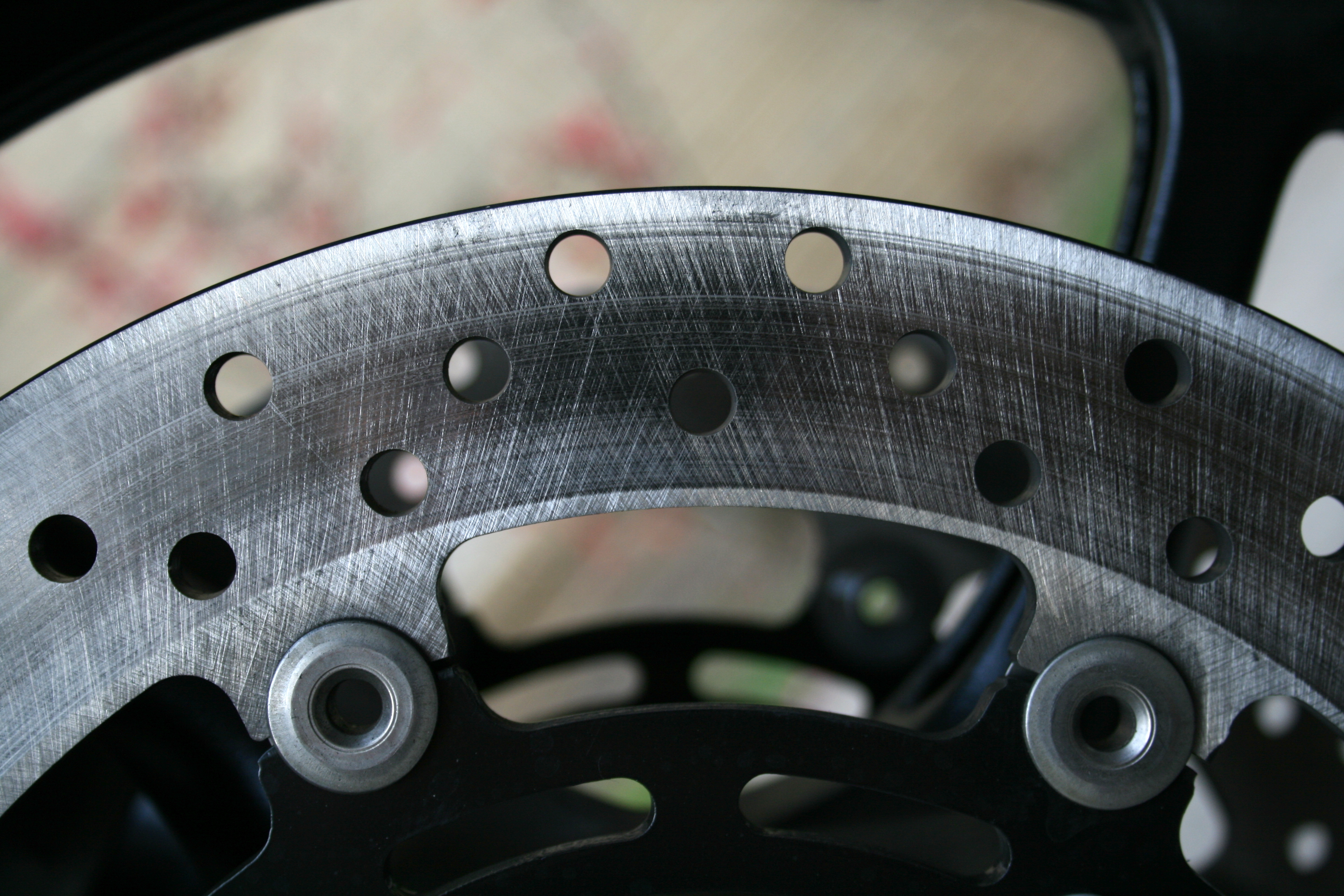
A motorcycle does not pull to one side the way a car does. What you feel is a bar that wants a steady correction, a front that tucks, or a rear that steps when that end grabs. After you stop, compare the two front discs if the bike has a pair, and compare front to rear. The hot disc is the one that was rubbing. You can often feel that heat from a few centimeters away without touching it. A blue or purple band on a cold disc is the mark of earlier overheating. A disc that is still glowing is a reason to stay off the road until it goes dark and cools.
Look at the caliper area for wetness. Brake fluid on the outside of a hose, a banjo bolt, or a reservoir is a leak. A falling fluid level in the reservoir with no obvious wet spot can mean a pad worn thin, because the pistons have moved out to take up the wear. Either way, a soft lever plus a wet caliper is the end of the ride.
Park, cool, then decide
Leave the traveled lane. A wide shoulder, a side street, or a car-park entrance where traffic can see you is the place. Hold the brake until the bike is fully stopped, then release the lever so the pads are not clamped on a glowing disc.
Wait. Let the disc go from any glow back to dark metal, and then wait longer so the caliper and the fluid can shed heat. Roll a few meters with the lever released. Squeeze the lever again in a safe spot.
Continue only if the lever is firm, the bike slows as it did at the start of the ride, and no smoke is coming off a caliper. For the rest of a hill, brake in short presses and use a lower gear between them. If the lever stays soft, if smoke continues, or if one disc is still far hotter than the other after a short cool-down, the trip ends there. Leave the bike and arrange a recovery. A soft front brake on a motorcycle is not something to test at speed.
Let the air cool the disc. Do not pour water on it. A sudden splash on hot steel can crack or warp a thin motorcycle disc. The same rule belongs on a car rotor. On a bike the disc is thinner, so the risk is not smaller.
What a mechanic checks
A shop can measure what a roadside stop cannot.
They look at how much friction material is left on the pads, and whether the wear is even. A pad worn on a slant often means a sticky piston or a seized slider pin. They measure disc thickness against the minimum stamped on the disc. A thin disc heats faster and cracks more easily at the mounting holes. They look for a blue band, cracks, and a lip at the outer edge. They check that the pistons retract and that the caliper slides if it is a floating design. A caliper that stays on the disc is the usual reason one front disc glows after an ordinary ride.
On the hydraulic side they confirm the DOT fluid the maker specifies, and they replace fluid that has taken on water or that has already boiled. Bleeding a motorcycle brake is a shop job when the system has been opened or when the lever stays soft after a cool-down. The wrong fluid, or a contaminated reservoir, damages seals. They also check hoses for swelling and fittings for leaks.
They ask how the heat arrived. One hard panic stop on a cold road bike is different from a sticking caliper on a commute, and both are different from a track day on street pads. The pads, the disc, and the fluid may all need attention after a glow. Replacing only the pads on a blue, thin disc is how the next glow arrives sooner.
The front disc is where the stop lives
The number that belongs on a motorcycle is the size of that front disc, and the share of the stop it takes. On many road bikes the front discs are about 300 mm to 320 mm across, often as a pair, with a smaller rear disc for balance. Most of a hard stop from road speed goes through that front pair because weight has shifted onto the front tire. A scooter’s 190–220 mm city disc is smaller and sees milder, repeated stops. A car spreads the same physics across four larger rotors. The motorcycle concentrates the heat where the rider can see it: on the front disc that can glow after a hard stop or a dragging caliper, and on the lever that goes soft when the fluid boils.
The mistake that cooks the front brake
The action that makes this worse is riding on after the lever has gone soft, or after one disc is already smoking. The pads stay hot, the fluid that has boiled does not recover while you are still squeezing, and a stuck caliper will only get hotter. Treating a glowing road disc as proof of a good stop is the same error. Park it, let the disc cool in the air, and have the caliper, the pads, the disc thickness, and the fluid checked before the next ride.
Read next: Scooter Brakes: Small Discs, City Stops, and a Drag After Rain, and What brake glow looks like on a car.