A hot smell on a bus is a reason to stop
A city bus, a coach, or a school bus that smells of hot brakes, smokes at a wheel, or needs more road to stop is showing fade, not a normal hill smell. The bus is heavy, and on a city or school route the stops come often enough that the drums or discs get little time to cool. Pull into a safe place. If the pedal or treadle feels soft or long, the bus pulls to one side, or smoke continues, that trip is over.
What is heating the brakes
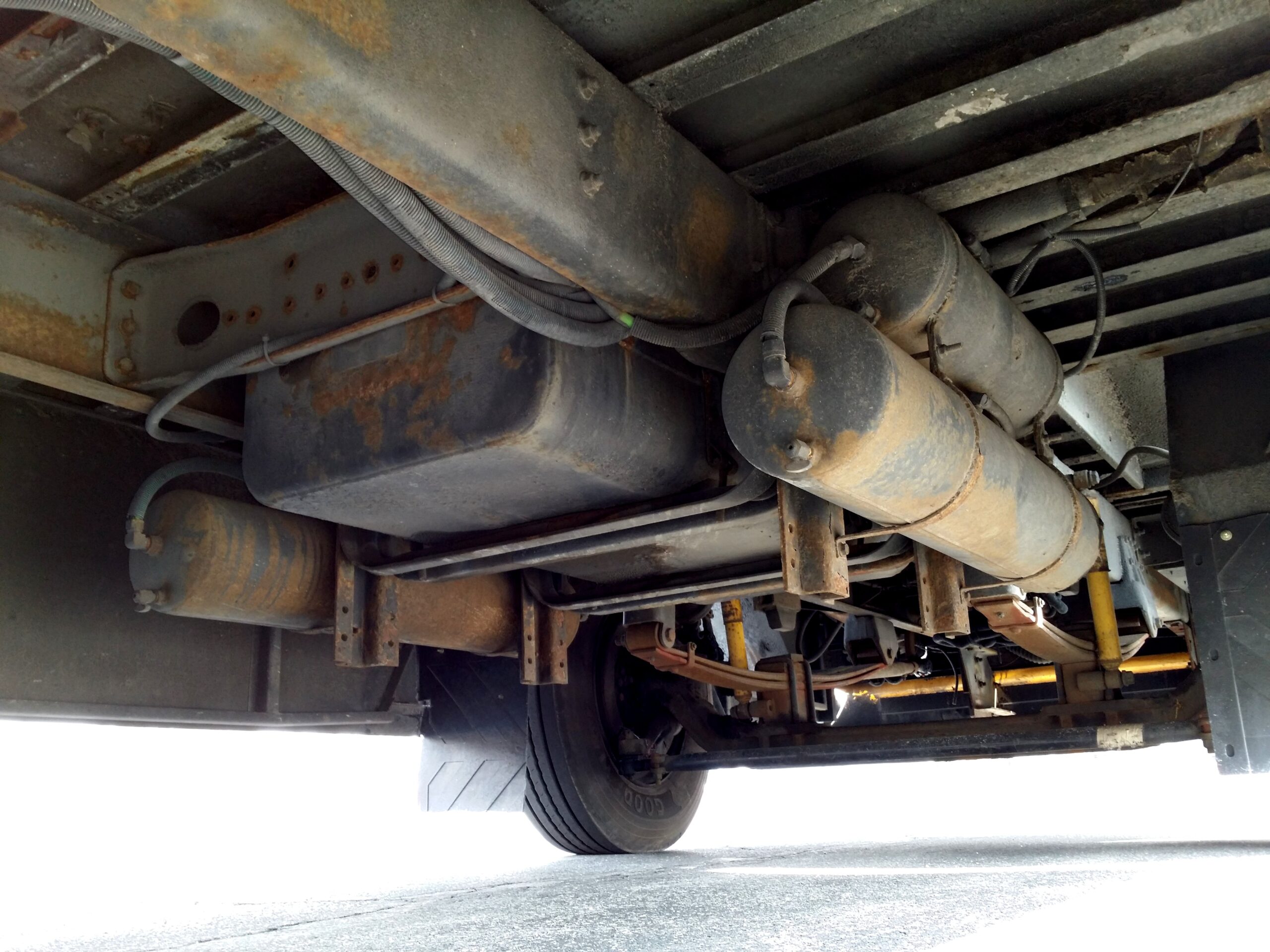
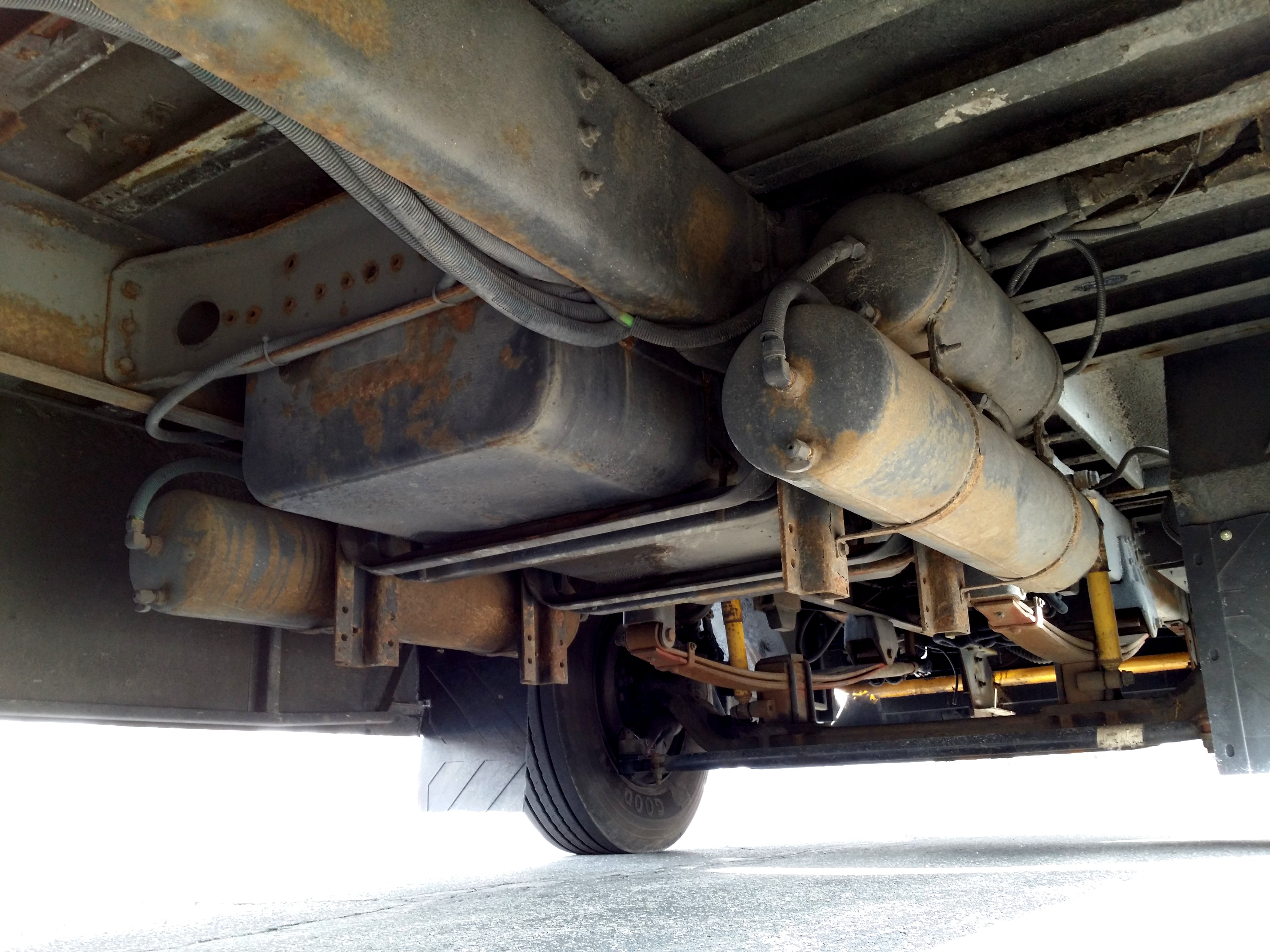
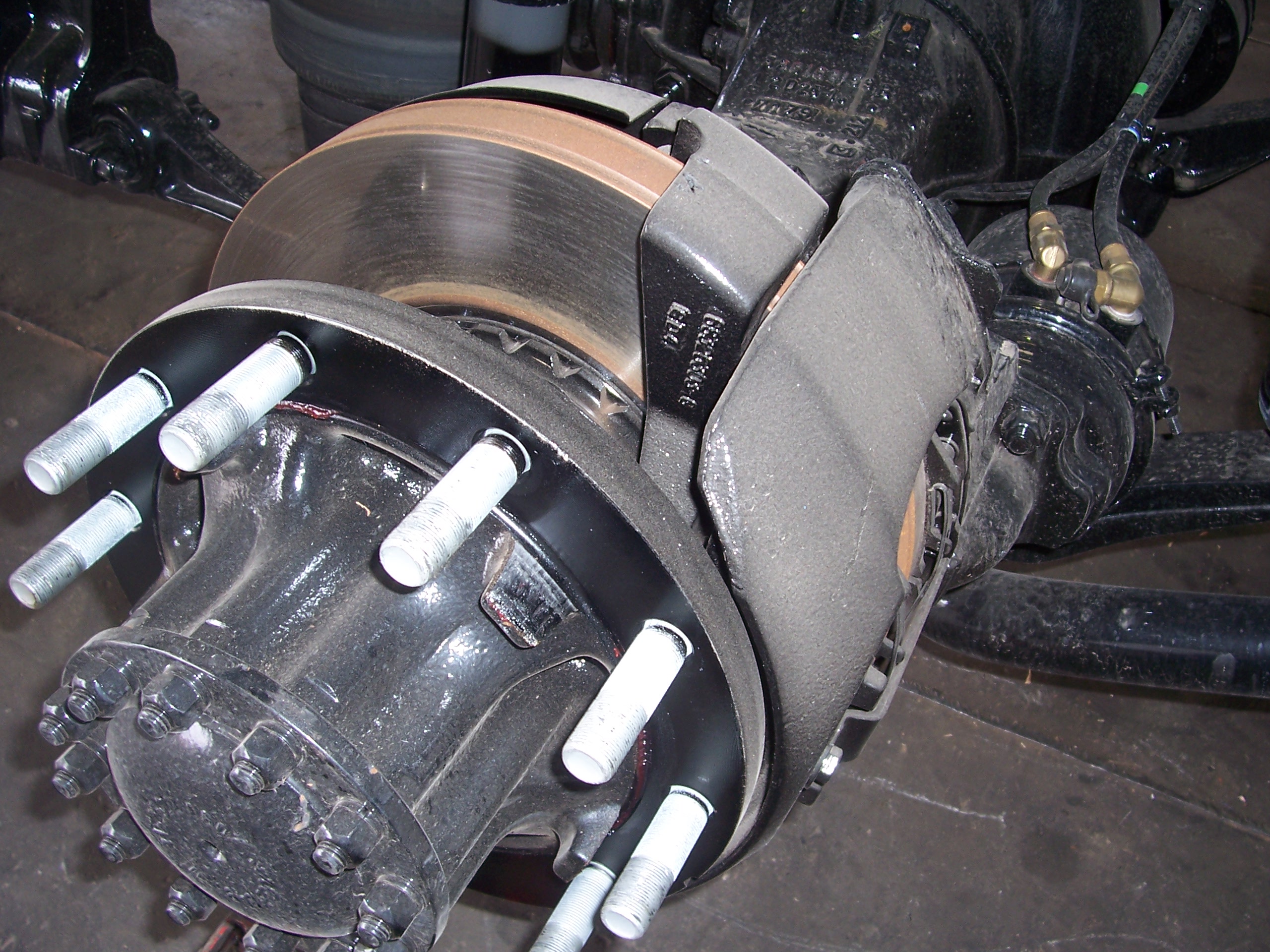
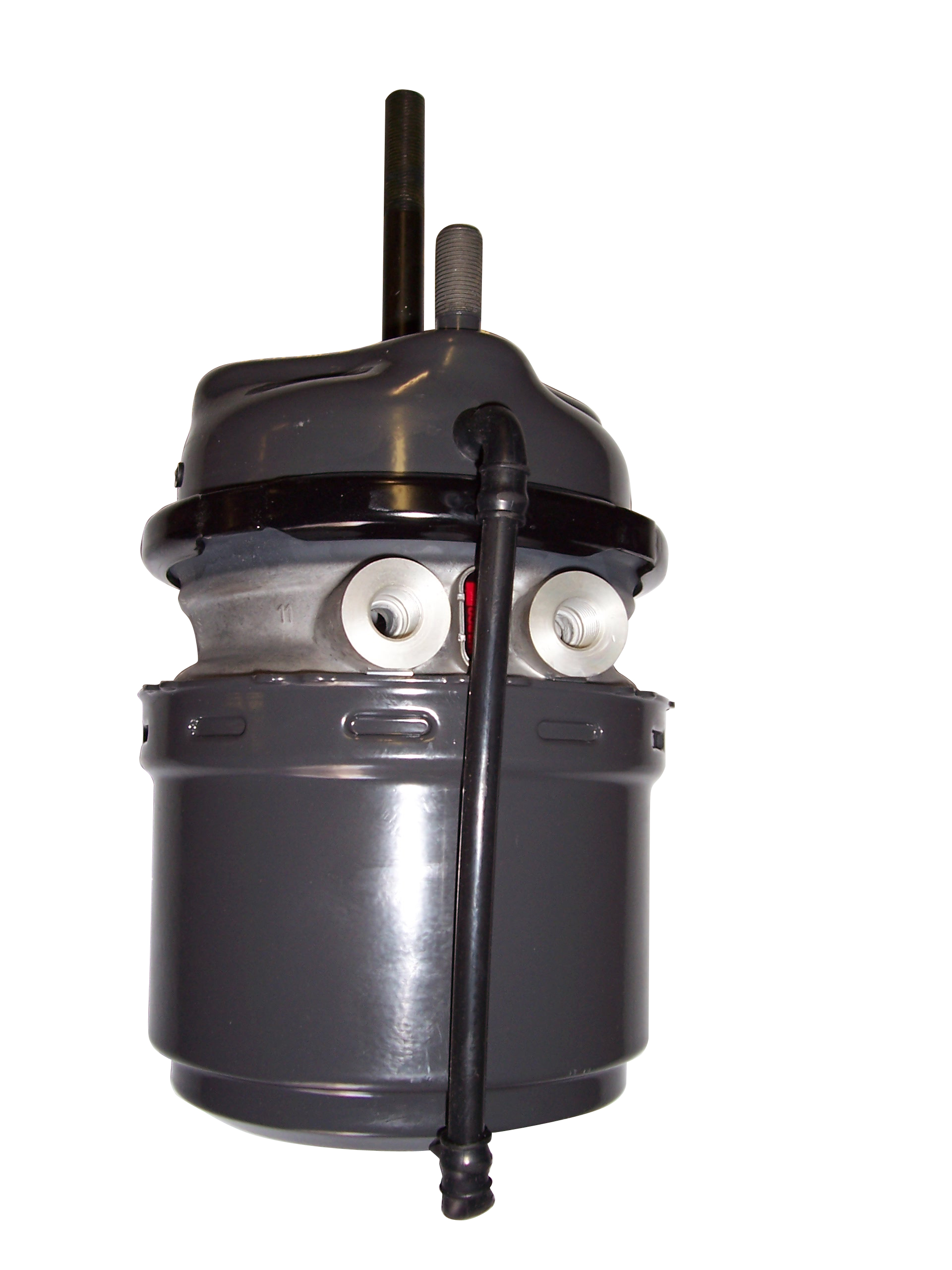
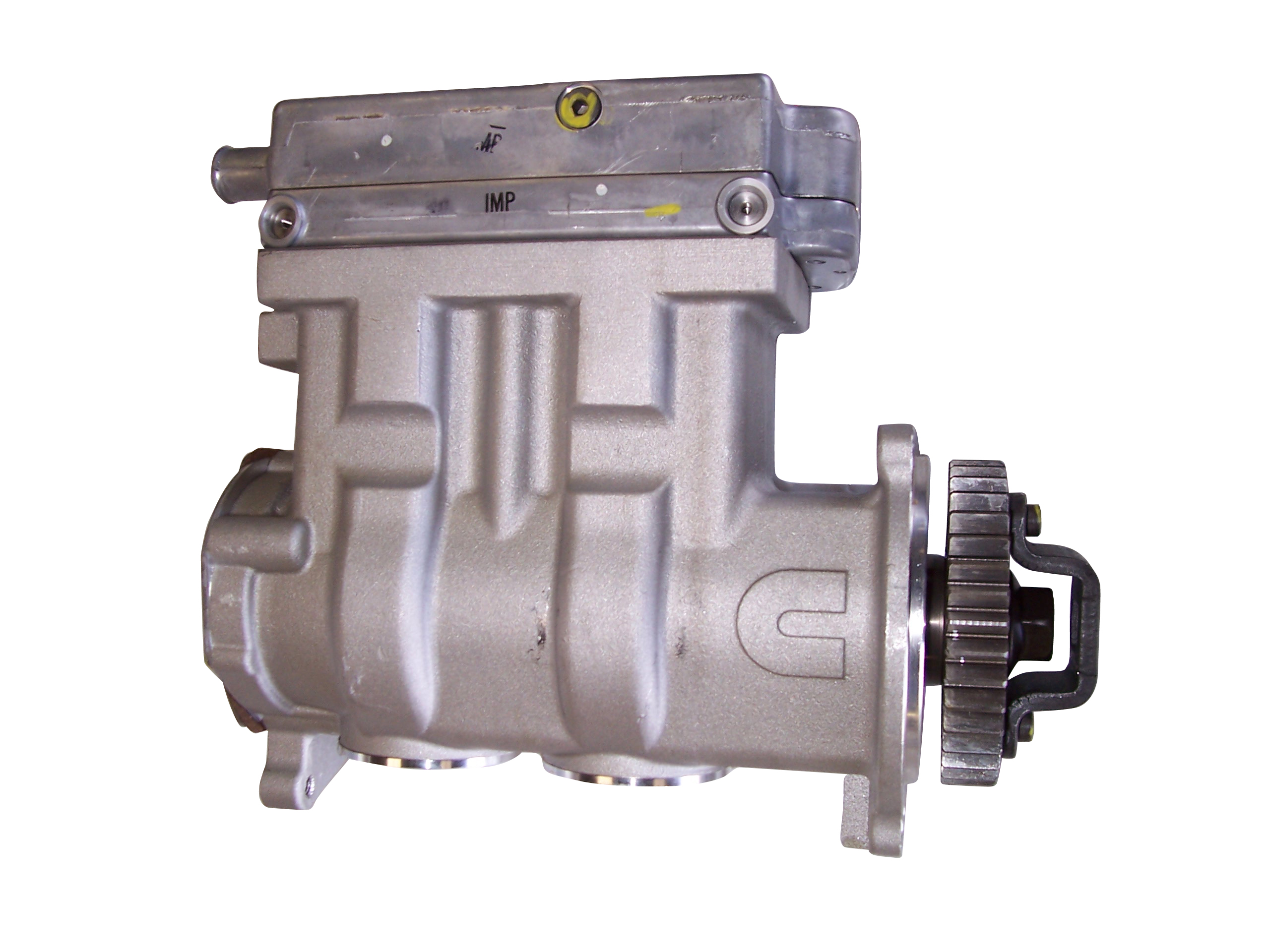
Friction is what stops the bus, and friction turns motion into heat. On most full-size city buses, coaches, and school buses the service brake is an air system. Shoes press outward into drums, or pads clamp an air-powered disc. A compressor driven by the engine fills storage tanks. The treadle meters air into brake chambers. Each chamber pushes a rod that applies the shoes or the caliper. When the driver lifts off, that air should exhaust and the lining should lift clear. Clearance is what lets the drum or disc shed heat before the next stop.
Parking works in the other direction from a car’s cable. Powerful springs inside the chambers apply the parking brake. Air pressure holds those springs compressed while the bus is moving. If the air supply is lost, the springs apply. That is a different machine from the brake fluid in a passenger car. A warning lamp, a buzzer, or a steady hiss is a reason to park, not a gauge to nurse along the route.
A small shuttle or minibus may still use hydraulic discs, the same layout as a delivery van. The driver has to know which bus they are in. A pedal that sinks on a hydraulic shuttle can mean a fluid problem. A long treadle on an air-braked bus is more often excess chamber travel, a leak, or linings that are no longer meeting the drum. This article is about the heavy bus. Its drum temperatures are not the rotor temperatures quoted for cars, and the measurements a shop uses on a car disc do not transfer to a bus drum.
Drums fade in a way discs do not. Heat swells the drum, so the round friction surface moves away from the shoes. The same air pressure then produces less stopping power, and the pushrod has to travel farther to catch up. An air disc does not fade by growing away from the pad. The pad and the disc still absorb every stop as heat, and they still fade if the driver never gives them a gap to cool. Smoke from either layout means the friction material is past a normal working temperature.
How a full bus compares with a van and a heavy truck
A common 12-metre city bus weighs on the order of 12 to 15 tonnes before passengers board. A full load of seated and standing riders can add several more tonnes, so a loaded bus is often around four times the mass of a loaded delivery van, and sometimes more. At the same speed, energy rises in step with mass. Four times the weight is about four times the heat the brakes must absorb to reach a stop.
Speed still changes the size of that job. Energy rises with the square of speed, so a stop from 50 km/h puts about four times as much energy into the brakes as a stop from 25 km/h in the same bus. City speed feels modest next to a highway. The mass does not.
The smaller vehicle in this comparison is the delivery van. A van also builds heat with repeated city stops and no mountain in sight. Its brakes are usually hydraulic discs, sized for a vehicle that, fully loaded, is still a fraction of a bus. The van’s warning signs are a hot smell, a soft pedal, or a pull after a day of stops. The bus shares the stop-and-go pattern and replaces the van’s mass with something closer to a truck. That is why a smell the driver might watch on a van is a reason to take a bus out of service.
The larger vehicle is a heavy truck on air brakes. The parts belong to the same family: compressor, tanks, chambers, drums or air discs, and spring brakes that apply if air is lost. A line-haul truck often meets its worst heat on a long grade, and it is expected to use an engine brake or retarder so the pedal is only a series of short applications. A city bus meets its heat on flat streets, one passenger stop after another, with almost no long roll in which the drums can cool. A coach sits between those two jobs. It stops less often than a city bus, then spends the heat budget on a mountain descent the way a truck does.
Use is what makes the inspection frequent. Ten kilometres of city route with a stop every few hundred metres is on the order of 25 to 40 brake applications. Each one converts the motion of a full bus into heat, and the gap before the next stop may be only a short block. A school bus repeats the pattern in traffic and at every school zone, with a full row of seats even when the street is flat. Nothing in that description depends on a mountain.
What the driver can check without tools
Smell is the first thing people notice, and it is the easiest cue to shrug off. A short hot-lining smell after a steep drop, with the next stop still short and straight, can be heat leaving the drums. The decision is the stop after that. If each stop takes more road than the one before, the smell is fade. Fade is the point where more treadle produces less stopping. On a bus, that fade is not treated as a normal hill smell, and the route does not continue while someone waits for it to burn off.
Smoke at a wheel is a different sign from smell. It means a lining, a drum, or a disc is hot enough to char the friction material, or a chamber is holding that brake applied when the treadle is up. Finish the move into a safe bay. Do not roll the next block to see whether the smoke thins out.
The pedal does not tell the same story on every bus. On an air-braked coach or city bus the treadle can feel ordinary while the stop is already too long, because the failure is chamber stroke or a drum that has grown, not a column of fluid. If the treadle travels farther than it did at the start of the shift, or the bus runs past the usual mark, treat the stop as failed. On a hydraulic shuttle, a pedal that sinks toward the floor can mean fluid that has boiled or leaked. Either reading ends the trip. A firm treadle with a longer stop is still fade. It is not a reason to press harder and stay in the lane.
A pull to one side means the wheels are not sharing the stop. A chamber that is stuck applied, a lining contaminated with grease, a leak on one side, or a caliper that is dragging will tug the bus toward the stronger brake. Passengers feel it as a step sideways in the aisle. Steering against it does not cool the hot wheel. Park and have that side compared with the others.
After the bus is parked and held, one hub that throws obvious heat when the others are only warm usually means that brake did not release. Do not put a hand on the drum or the disc. Heat you can feel a short distance from the wheel, on one corner only, is enough to decide. On a bus fitted with air discs, a rotor that has turned blue is that same disc far above a normal stop. It is not evidence that the stop was done well. Let it cool in free air. Do not pour water on it. A sudden quench can crack the iron.
The air gauges describe the supply, not the linings. Pressure that will not recover, a warning that stays lit, or a leak you can hear means the spring brakes may apply on their own schedule. Choose the parking place before they choose it. A gauge in the normal band does not prove the shoes are thick or the drums are round. It only says air is available to push whatever hardware is left.
What to do at the roadside
At the roadside, signal early and take the next bay, stop, or shoulder where the bus is out of the travel lane. Set the parking brake if the bus would roll without it. If it will sit without rolling, leave the service brakes released so the shoes or pads are not clamped on hot metal for the whole cool-down. Cooling is time and air. Water on a hot drum or rotor is the wrong tool. It can crack the metal, and it does not restore a lining that has already overheated.
Move the bus again only if a low-speed test stop is as short and as straight as a normal stop, smoke has stopped, and any air warning is out. If the pedal or treadle is soft or long, the bus pulls, or smoke continues, the trip ends there. Passengers should leave only where that is safe. The bus does not re-enter service on those brakes.
Do not try to adjust the brakes at the curb. On a drum brake the mechanic measures how far the pushrod travels and compares that stroke with the limit for that chamber. Turning a slack adjuster in a parking lot can hide a worn lining or a damaged part and still leave the next stop long. Stroke correction is shop work. This page will not walk through it.
What a mechanic or inspector checks
A mechanic or an inspector starts with the parts that do the stopping, then with the air that applies them. On drums they look at lining thickness and at drums that are cracked, scored, or heat-checked. Drums have their own diameter and thickness limits. Those limits are not the runout figures used on a passenger-car rotor, and a car micrometer spec does not belong on this vehicle.
On air discs the same visit covers pad thickness, the condition of the rotor, and whether a caliper is sticking. A sticking caliper turns every kilometre into a light application, so that wheel arrives at the stop already hot. One hot wheel after an ordinary route is a reason to look at that chamber or caliper before anyone talks about “the hill.”
Beside the friction parts, the inspector checks the air system that makes them move. That means leaks, warning devices that actually warn, and pushrod stroke at each wheel. Stroke past the limit for the chamber means the shoes are using up their travel before they press the drum firmly. Finding that measurement is the check. Adjusting it is not a driver’s roadside task.
If the vehicle is a hydraulic shuttle rather than an air-braked bus, the fluid system is part of the visit: leaks, a pedal that sinks, and fluid that has been overheated. An air-braked bus does not get that fluid diagnosis, because the service brake is not filled with brake fluid. Mixing the two inspections is how a drum problem gets treated with advice written for a car.
Why these brakes are inspected so often
The specific fact that belongs to this vehicle is the combination of weight and stop spacing, and it is why the inspection exists. A loaded city bus can weigh several times what a delivery van weighs, and a city or school pattern can ask the brakes to throw away that energy every few hundred metres, dozens of times in a single run, on a road with no grade at all. Operators therefore inspect the brakes on a repeating schedule, and a pre-trip look at gauges, warnings, leaks, and obvious lining or pad wear is part of sending the bus out. This site is not a regulator, and there is no single interval printed here that every city uses. The inspection exists because a thin lining or an over-stroke chamber shows up as a longer stop with passengers on board.
The mistake that makes fade worse
The mistake that makes the problem worse is to treat that longer stop, the smoke, or the pull as an ordinary hill smell and keep the bus in service. Holding the treadle between stops piles on more heat, because the shoes or pads never leave the surface long enough for air to cool it. Extra pressure on a faded drum does not hand the stop back once the drum has grown away from the shoes. It adds heat. Park, cool the brakes in the air, and let a mechanic measure the linings, the drums or rotors, and the chamber stroke before the bus takes another load.
Read next: Delivery van and light-truck brakes, and Motorhome and RV brakes on a mountain grade.
.jpg)

