A full SUV, pickup, or van makes more brake heat from the same speed than the same vehicle empty. Extra people and cargo add weight, and the brakes must turn that extra motion into heat on every stop. A hot smell after one ordinary stop can be the load talking. Smoke, a soft pedal, a pull to one side, or a dull red rotor is a reason to stop driving and let the brakes cool. A normal stop from 60 mph raises front rotors about 150–250°F when the vehicle is not overloaded. A full load pushes that rise higher from the same speed, and several hard stops in a row can reach 600–800°F, which is the range where a rotor can glow and the brakes can fade.
Why extra weight multiplies heat from the same speed
Friction at the pad and rotor turns motion into heat. Kinetic energy scales with weight: double the weight at the same speed and the brakes must absorb about twice the energy before the vehicle is stopped. Speed still matters more than people expect, but on an SUV, pickup, or van the day-to-day change that matters is how full the cabin and cargo area are. The same 60 mph stop with a full payload is a larger energy dump than the empty-vehicle stop the driver may be used to.
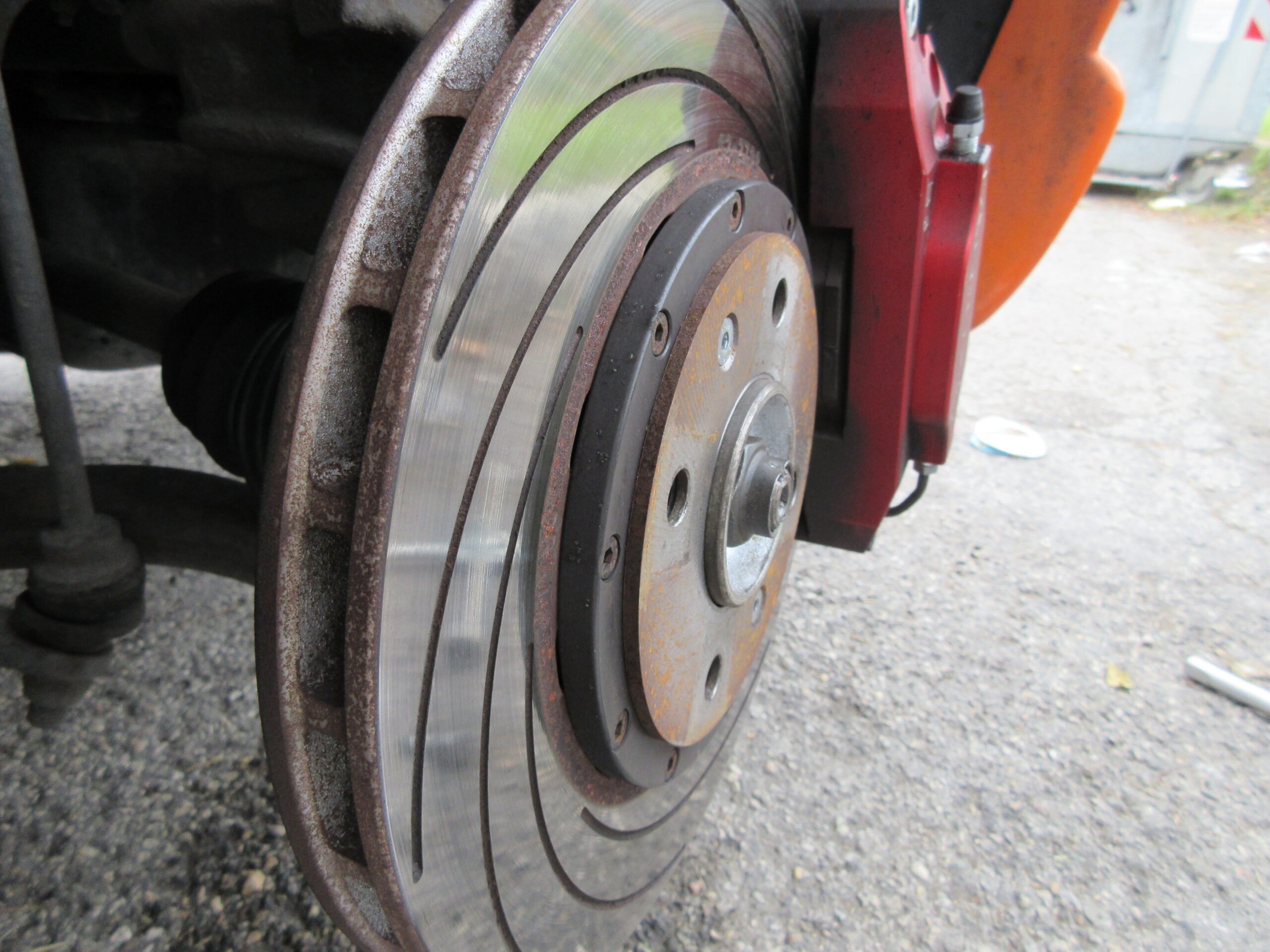
The hardware that takes that dump is familiar. Pads clamp against larger vented front rotors. Calipers push the pads with hydraulic pressure from the pedal. Brake fluid carries that pressure, and that fluid absorbs water over time, which lowers its boiling point when the calipers get hot. Fresh fluid resists boil longer; old, wet fluid is the first to make a soft pedal after a string of hard, loaded stops. Front rotors do more of the work because, as soon as you brake, the load shifts forward onto the front tires. The rear discs or drums still matter for balance, but the front pair carries the larger share of heat on a hard stop. That is why the front rotors on these vehicles are sized larger than a small car’s: more mass at road speed means more heat, and the front axle sees most of it. Heat at the rotor still depends on speed, weight, and how hard and how long the pads stay on the iron—so a full load plus a long pedal hold is a different thermal event than a full load plus a short, firm application.
Smaller hatchbacks, larger air-brake trucks
Size is easiest to see by comparing neighbors, not by inventing a single magic diameter.
Smaller: a hatchback or compact SUV has smaller rotors and less vehicle mass, so the same 60 mph stop puts less energy into the iron. The stop still heats the fronts, but the jump from “empty” to “full of people and bags” is smaller than on a large SUV, a crew-cab pickup, or a loaded van. A motorcycle sits even further down the scale for a different reason: most of a hard stop goes through one or two thin front discs the rider can see, and that front disc can glow after a hard stop, but it is not a light-truck hydraulic system with four large rotors and a cargo rating. Keep motorcycle heat talk on the motorcycle page; do not paste car lug-nut or runout numbers onto a bike disc.
Larger: a bus or a heavy truck with air brakes is a different system. Compressed air applies the foundation brakes, and many of those vehicles still use drums that can fade when the drum expands away from the shoes. Do not treat the 150–250°F or 600–800°F car-rotor figures as truck-drum temperatures. A loaded passenger van or a pickup full of cargo is still a hydraulic disc vehicle. Pedal pressure moves fluid. Pads clamp rotors. It is not an air-brake truck, even when the van feels heavy in the seat.
What you can check after a loaded stop
Smell after a loaded stop can be normal heat leaving the pads. If the smell arrives after one ordinary stop that felt fine when the vehicle was empty, treat the payload as part of the diagnosis. Smoke at a wheel, or a smell that stays while you are still rolling with the pedal released, means the stop was past a normal cool-down—or a pad is still dragging.
Feel the pedal carefully. A firm pedal that needs a longer travel of the vehicle to stop is often pad fade: the friction material is hot and has less bite, but the hydraulic system is still solid. A pedal that sinks toward the floor, or that needs a pump to firm up, is fluid fade or a hydraulic problem: the fluid has boiled into vapor, or air or a leak has entered the system. Those two feels are not the same decision. Firm-but-longer can mean cool the brakes and change how you use the grade. A sinking pedal ends the trip.
A pull to one side under braking, or one wheel that is clearly hotter than the others after a short stop, points to a stuck caliper or uneven work on that corner. After the rotors cool, a blue or purple band on the iron is a heat mark from earlier overheating. Compare that to the vehicle’s payload sticker: people plus cargo can move the vehicle from a normal empty stop into the heat range the rotors were sized for primarily when the vehicle was empty or lightly loaded. A Saturday with every seat filled and the cargo area packed is not the same thermal stop as a solo commute in the same truck. Gross vehicle weight rating on the door jamb is the ceiling the driver should compare with the actual load—people, pets, tools, coolers, and anything in the bed or behind the last row. It is not a temperature number, and this page does not invent a GVWR for any specific model. If the actual load is near that rating, treat every long grade as a heat-management drive, not as an empty-vehicle habit.
Pull over, cool in the air, then decide
Leave the traveled lane. Release the pedal once you are fully stopped so the pads are not clamped on a hot rotor. Let the brakes cool in the air. Wait until any glow is gone and the smell has faded before you roll again.
Continue only if the pedal is firm and stopping feels normal in a low-speed check in a safe spot. Soft pedal, a pull that stays, or continued smoke ends the trip. Arrange a tow or a repair rather than testing the next hill. Do not pour water on a hot rotor. A sudden splash on hot iron can crack or warp the disc. On the rest of the grade, use a lower gear and short brake applications so the pads leave the rotor between presses and air can carry heat away.
What a mechanic measures on a loaded vehicle’s brakes
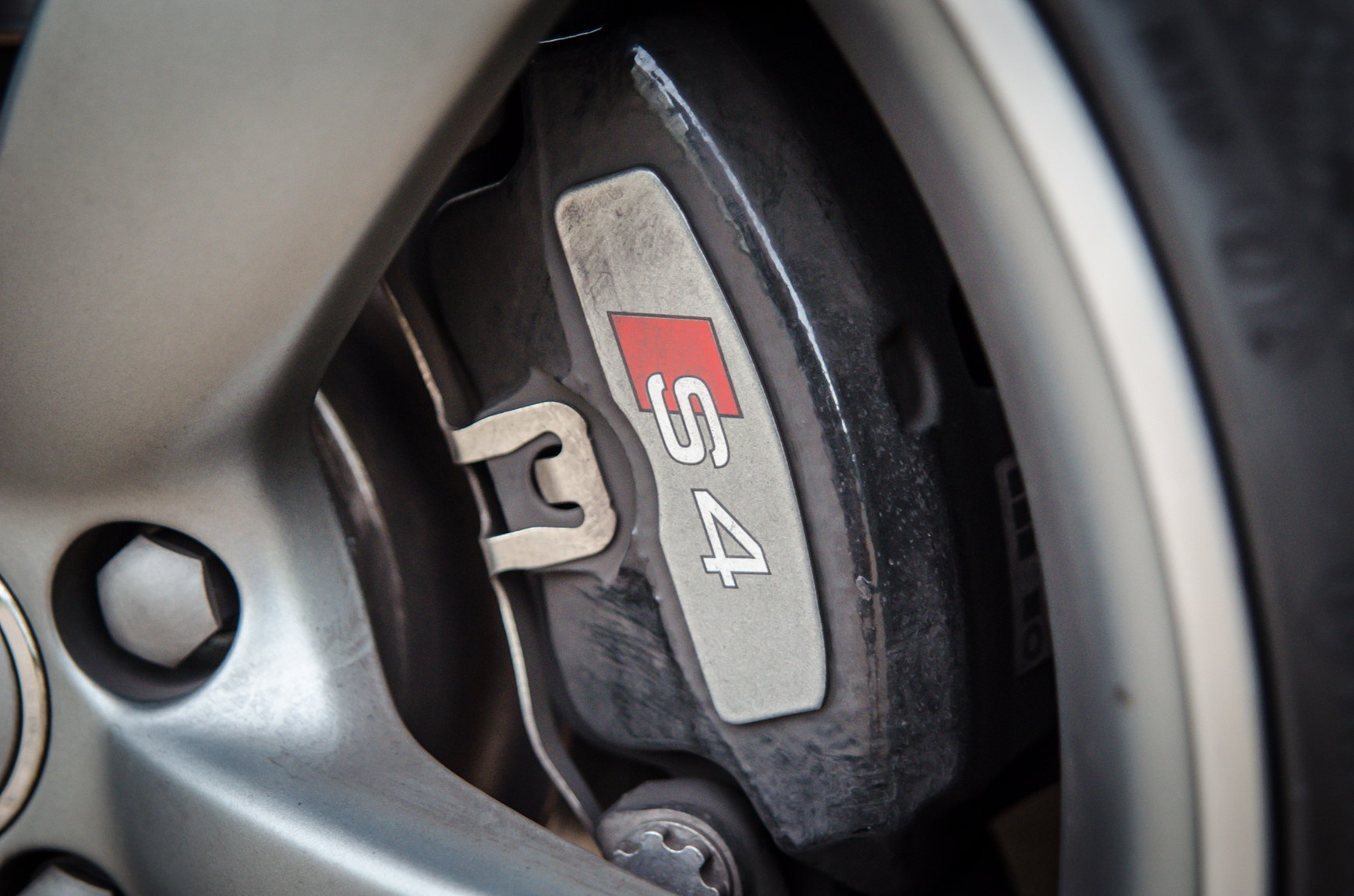
A shop can measure what a roadside stop cannot. Pad thickness shows how much friction material is left and whether wear is even across the pad. Uneven wear often means a sticky piston or a seized slider. Rotor thickness is checked with a micrometer against the minimum stamped on the disc. A thin rotor heats faster and has less metal left to absorb the next hard stop. Cracks and hard spots matter more after a heat event. Hard spots often return after machining, which is why damaged rotors are commonly replaced in pairs rather than resurfaced and sent back under a full load.
They also check for a sticking caliper and for fluid that has boiled or taken on water. Boiled fluid is a reason to replace the fluid and find why the calipers got hot enough to cook it. This page does not walk through opening the hydraulic system. That is shop work. The driver’s job before the appointment is simpler: know how the vehicle was loaded, what the pedal did, and what the door-jamb gross vehicle weight rating says compared with the actual people and cargo on board.
Why these rotors are larger than a small car’s
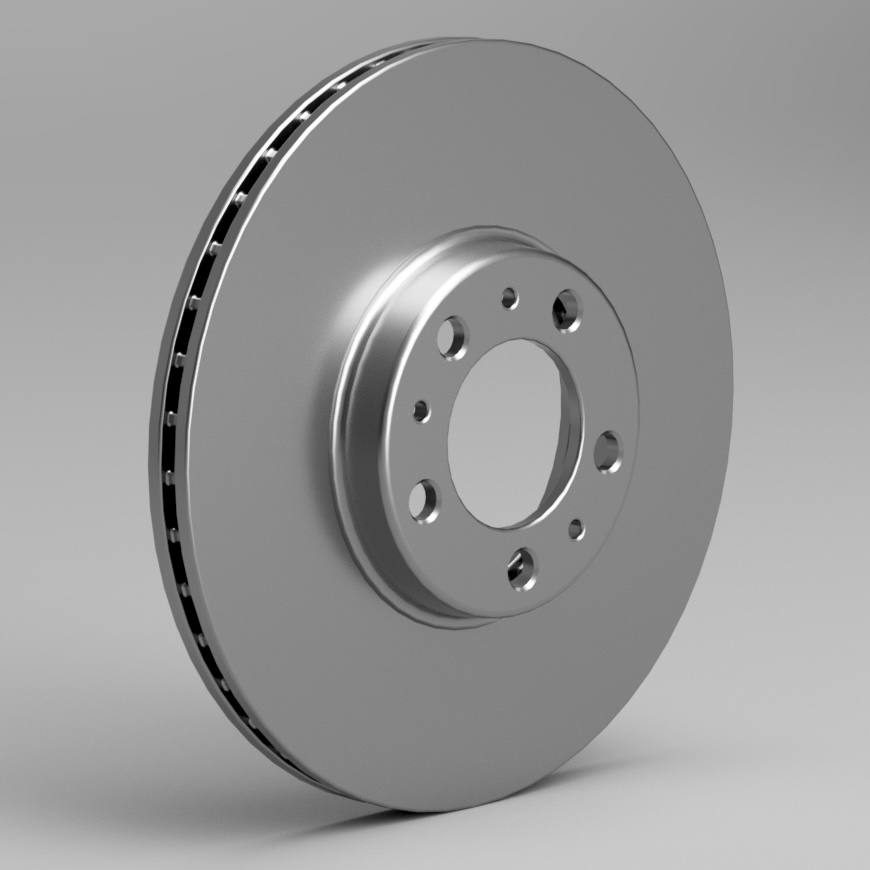
These rotors are larger than a small car’s because the same speed with more weight makes more heat. That is the design reason for the bigger vented fronts on many SUVs, pickups, and vans. Speed still outweighs casual intuition: a light car from 60 mph can still make more braking heat than a heavy SUV from 20 mph, because kinetic energy rises with the square of speed. Weight multiplies the energy at a given speed; speed multiplies it faster when the number climbs.
Vented front rotors shed heat faster than solid rears. Air moves through the cooling ribs between the faces while the wheel turns. Solid rears are common where the heat share is smaller. Semi-metallic pads usually tolerate more heat than organic pads, which matters when a full load and repeated stops push the fronts toward the upper end of the normal range. Economy rotors with fewer cooling ribs can run hotter than a design with more ribs and more iron; that is a design fact about heat capacity and airflow, not a brand recommendation. There is no US federal standard that every aftermarket rotor must pass. SAE J2928 is a voluntary test: a rotor is heated through 150 cycles and must not grow a dangerous crack. A rotor sold as lighter because the faces were made thinner has less metal to absorb heat on the next loaded stop from highway speed. On a vehicle that regularly carries a full cabin or a packed bed, that missing iron shows up as higher peak temperature for the same stop, not as a free upgrade.
The loaded-grade mistake that cooks the brakes
The action that makes this worse is filling the vehicle to the roof and then riding the pedal down a grade as if the vehicle were empty. The pads stay on the rotors. Heat has nowhere to go. The same weight that already multiplied the energy of each stop now keeps the friction surfaces working without a cool-down. Short applications and a lower gear are the opposite choice: they cut speed with the engine and give the rotors air between presses. Riding the pedal with a full load is the one habit that turns an ordinary mountain descent into fade, smell, and, in the worst runs, a rotor hot enough to glow. If you already smell hot brakes after the first loaded stop on the grade, that is the moment to pull over and cool—not the moment to keep dragging the pedal to the bottom.
Read next: Motorcycle Brakes: Why the Front Disc Does Most of the Stop, and Towing a trailer.

_Brake_Rotor.jpg)
.jpg)